
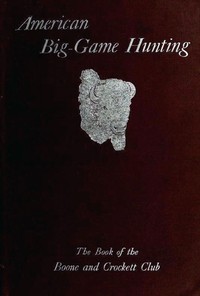
American Big-Game Hunting: The Book of the Boone and Crockett Club
Forget what you think you know about old hunting books. American Big-Game Hunting isn't a dusty manual; it's a time capsule. Published in 1893 by the Boone and Crockett Club, it collects essays, reports, and personal narratives from its members—a who's who of influential men like Theodore Roosevelt, George Bird Grinnell, and Archibald Rogers.
The Story
The book doesn't have a single plot, but it has a clear and powerful arc. It opens with thrilling, first-hand accounts of hunting bison, moose, and grizzly bear in the American West. The writing is vivid and full of respect for the animals and the challenge. But as you read, the tone shifts. The later sections are less about the thrill of the hunt and more about cold, hard facts: shocking reports on the rapid depletion of game, discussions on unfair hunting practices like market hunting, and earnest debates on proposed laws. You see the club transition from a social group for sportsmen into a political force, lobbying for the first wildlife protection laws and the creation of national forests. The 'story' is the birth of a conscience.
Why You Should Read It
This is where history gets personal. Reading these men argue for conservation over a century ago is genuinely moving. You feel their urgency. Roosevelt’s passion isn't just political; it's visceral. He loved hunting, but he loved the wild places and the existence of the game more. The book destroys the simple modern idea of 'hunter vs. environmentalist.' Here, they were the same people. It gives incredible context to why we have the systems we do today. It’s also just a great adventure read—the early hunting tales are pulse-pounding descriptions of a vanished frontier.
Final Verdict
Perfect for history buffs, outdoor enthusiasts, and anyone curious about the tangled roots of American environmentalism. If you enjoy books that change your perspective, this is a hidden gem. It’s not a light read—the language is of its time—but it’s a profoundly important one. You’ll finish it with a new understanding of how the wild places we sometimes take for granted were first fought for by the most unexpected champions.
This title is part of the public domain archive. Access is open to everyone around the world.
Sarah Jones
2 years agoIf you're tired of surface-level information, the way it handles controversial points with balance is quite professional. The insights gained here are worth every minute of reading.
Matthew Jackson
6 months agoThis digital copy caught my eye due to its reputation, the historical context mentioned in the early chapters is quite enlightening. A rare gem in a sea of mediocre content.
Susan Taylor
1 year agoHaving explored several resources on this, I find that the language used is precise without being overly academic or confusing. It’s hard to find this much value in a single source these days.
Joseph Wilson
1 year agoI wanted to compare this perspective with traditional views, the emphasis on ethics and sustainability within the topic is commendable. An excellent example of how quality digital books should be formatted.


Christopher Thompson
3 months agoAfter spending a few days with this digital edition, the evidence-based approach makes it a very credible source of information. The insights gained here are worth every minute of reading.