
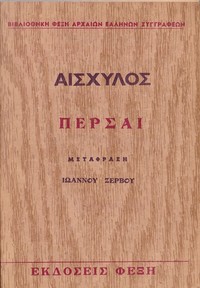
Πέρσαι by Aeschylus
So, what's the story here? The play opens in the Persian capital of Susa. The Queen and a council of elders are anxiously waiting for news. King Xerxes led a colossal invasion force to crush Greece, and they haven't heard a word. The mood is thick with dread.
The Story
A messenger arrives, and it's all bad news. In heartbreaking detail, he describes how the mighty Persian fleet was completely destroyed by the Greeks at the Battle of Salamis. He lists the names of fallen Persian nobles, making the loss painfully personal. The Queen is devastated. In her grief, she summons the ghost of her late husband, King Darius. He rises from the tomb, and his reaction is even more brutal. He blames his son Xerxes's reckless pride and overreach for the disaster, prophesying further defeats. Finally, the broken King Xerxes himself staggers in, his royal robes in tatters, leading a chorus of wailing survivors. The play ends not with a battle scene, but with the raw, unending sound of their grief.
Why You Should Read It
What floored me was the perspective. The Greeks won this war, but Aeschylus forces his Athenian audience to see themselves through their enemies' eyes. We feel the Persian mothers' fear, the elders' confusion, and the king's shame. It’s a stunningly human portrait of the 'other.' The themes are timeless: the danger of unchecked power (hubris), the unpredictable nature of war, and the fact that victory for one side is utter ruin for another. The choral odes are some of the most powerful poetry I've read—they don't just describe sadness, they make you feel its weight.
Final Verdict
This is for anyone who thinks classics are boring or irrelevant. If you're interested in the roots of drama, psychology in storytelling, or just a incredibly tense and emotional piece of writing, give it an hour of your time. It's perfect for history buffs who want to feel the past, not just read about it, and for any reader who loves a story where the real conflict happens in the hearts of the characters, not just on the battlefield. It's a short, sharp punch of a play that has stayed with me for weeks.
No rights are reserved for this publication. Access is open to everyone around the world.
Thomas Harris
5 months agoSurprisingly enough, the flow of the text seems very fluid. Exactly what I needed.
Donald Sanchez
1 year agoI stumbled upon this title and the arguments are well-supported by credible references. One of the best books I've read this year.
Barbara Garcia
6 months agoVery interesting perspective.
David Young
1 year agoUsed this for my thesis, incredibly useful.



Donald Lee
7 months agoInitially, I was looking for a specific answer, but the clarity of the writing makes even the most dense sections readable. I'll be recommending this to my students and colleagues alike.