
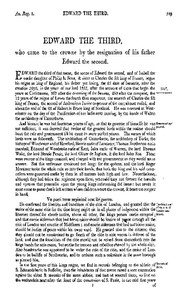
Chronicles of England, Scotland and Ireland (2 of 6): England (11 of 12)
Let's set the scene: It's the late 1500s, and Raphael Holinshed and his team are trying to compile the entire history of Britain. This volume, focusing on England, covers a turbulent period, particularly the dynastic wars between the Houses of Lancaster and York—the Wars of the Roses. It doesn't just give you one official version of events. Instead, it pulls together older chronicles, popular ballads, and contemporary reports, sometimes presenting conflicting accounts side-by-side. You get the story of weak kings, powerful nobles, sudden betrayals, and battles that changed the course of the nation, all told with a kind of sprawling, energetic detail that later, more sanitized histories often lack.
Why You Should Read It
You should read this not as a definitive historical record, but as a window into how the Elizabethans saw their own past. The characters aren't just names; they're portrayed with virtues and glaring flaws. You see Henry VI's piety and incapacity, the ambition of Richard of York, and the political cunning of figures like Warwick the Kingmaker. The themes are timeless: the heavy cost of leadership, the fragility of peace, and how personal ambition can tear a country apart. Reading this, you understand exactly why Shakespeare found it such rich material. The language is archaic, sure, but it has a directness and force that modern prose sometimes misses. It feels urgent.
Final Verdict
This is for the curious reader who loves history but wants to get behind the textbook summaries. It's perfect for Shakespeare fans who want to see the 'raw data' he worked with, and for anyone who enjoys complex, real-life political sagas. It's not a light, breezy read—you have to meet it halfway—but the reward is a truly immersive experience. You're not just learning about history; you're seeing how it was remembered, debated, and dramatized by the people who lived in its shadow. If you have the patience for its older style, it offers a uniquely unfiltered and compelling story.
This digital edition is based on a public domain text. It serves as a testament to our shared literary heritage.
Patricia Wright
9 months agoGreat reference material for my coursework.
Carol Wilson
11 months agoEssential reading for students of this field.





Michael Brown
1 year agoHonestly, the arguments are well-supported by credible references. One of the best books I've read this year.