
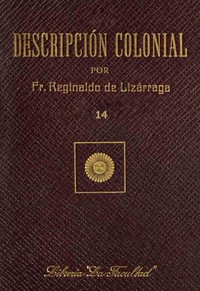
Descripción colonial, libro segundo (2/2) by Reginaldo de Lizárraga
Okay, let's be clear: this isn't a novel. "Descripción colonial" is a first-hand account, written around 1600 by Bishop Reginaldo de Lizárraga. He traveled extensively through the territories that are now Peru, Bolivia, Chile, and Argentina. The book is his attempt to document everything he saw, creating a massive report for the Spanish crown.
The Story
Think of it as a road trip across a continent being born. Lizárraga doesn't follow a traditional plot. Instead, he moves from place to place, describing each region in detail. He talks about geography—how tough the mountain passes are, what the rivers are like. He lists the crops being grown and the animals people raise. He gives population counts for towns, both Spanish and Indigenous. But the real story is in his observations. He praises well-run communities and openly criticizes Spanish officials he thinks are corrupt or cruel. He describes the ruins of Inca infrastructure with a kind of awe, even as he works within the system that destroyed that empire. You see the colonial world taking shape, street by street, farm by farm, through the eyes of a participant who isn't afraid to point out the cracks in the foundation.
Why You Should Read It
This book removes the filter. History books summarize and analyze; this book shows you the dust and the doubt. Lizárraga's voice is what makes it special. He's not a neutral observer. He's a churchman who believes in the Spanish mission, but he's also clearly frustrated by the greed and violence he witnesses. Reading his descriptions of Indigenous customs or the state of a local mine feels like getting a private briefing from a very well-informed, slightly grumpy source. You're not getting a polished narrative—you're getting the raw material of history, complete with its biases and blind spots, which is somehow more honest. It makes that distant era feel immediate and human.
Final Verdict
This is for the curious reader who wants to go beyond the textbook. It's perfect for history lovers who enjoy primary sources, travelers fascinated by South America, or anyone interested in the complex, messy reality of colonialism from the inside. It requires a bit of patience, as it's an old document, but the payoff is a perspective you simply can't get anywhere else. If you've ever read a historical fiction novel set in this period and wondered, "But what was it REALLY like?"—this book has your answer.
There are no legal restrictions on this material. It is now common property for all to enjoy.
Susan Miller
8 months agoThe methodology used in this work is academically sound.
John Brown
5 months agoMy first impression was quite positive because the way it handles controversial points with balance is quite professional. Simple, effective, and authoritative – what else could you ask for?
Donald Lee
11 months agoI was particularly interested in the case studies mentioned here, the language used is precise without being overly academic or confusing. A trustworthy resource that I'll keep in my digital library.
Sandra Lee
1 year agoWithout a doubt, the atmosphere created is totally immersive. I couldn't put it down.



Ashley Anderson
4 months agoI decided to give this a try based on a colleague's recommendation, the objective evaluation of the pros and cons is very refreshing. Highly recommended for those seeking credible information.