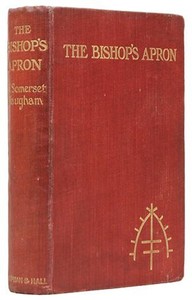
The Bishop's Apron: A study in the origins of a great family by W. Somerset Maugham
Let's be honest, the title sounds like a dusty old church history book. But don't be fooled. 'The Bishop's Apron' is a sly, compact novel that's more about ambition, hypocrisy, and the secrets we build our lives upon.
The Story
The book follows Theodore Spratte, a charming but self-serving clergyman who becomes Canon of a London parish. He's a social climber, obsessed with his family's status and his own rise to a bishopric (hence the 'Apron' of the title). The plot really kicks off when we learn the secret origin of the Spratte family's wealth and position. It all traces back to Theodore's father, who, as a young man, was involved in a shady deal involving a stolen silver teapot. This act of youthful folly, covered up and smoothed over, became the financial foundation for the family's later respectability. The story weaves between Theodore's present-day scheming for promotion and the unraveling of this old, buried scandal, showing how the past is never truly past.
Why You Should Read It
I loved this book for its quiet, sharp humor. Maugham doesn't shout his critiques; he lets you see them in the small, telling details of his characters' lives. Theodore Spratte is a fantastic creation—you can't help but be amused by his sheer audacity and skill at self-justification. He's not a villain, just a deeply human mix of ambition and self-deception. The book is a brilliant study of how people construct respectable lives on shaky foundations, and how society often willingly plays along with the charade. It’s less about dramatic events and more about the quiet tension between what is said and what is known.
Final Verdict
This is a perfect pick for readers who enjoy character-driven stories with a satirical edge. If you like authors like Jane Austen for their social observation, but wish they were a bit more cynical, Maugham is your guy. It’s also a great, short introduction to his work. You won't find epic battles or sweeping romance here. Instead, you get a smart, slightly mischievous look at the machinery of social class and the stories families tell themselves to sleep at night. A real hidden gem for a thoughtful afternoon read.
You are viewing a work that belongs to the global public domain. You can copy, modify, and distribute it freely.