
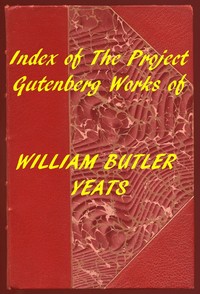
Index of the Project Gutenberg Works of William Butler Yeats by W. B. Yeats
Let's be clear from the start: this is not a book of poetry or plays in the traditional sense. If you're looking for 'The Second Coming' or 'Sailing to Byzantium,' you won't find the full text here. Instead, Index of the Project Gutenberg Works of William Butler Yeats is exactly what the title says—a structured list. Compiled by Yeats himself (or under his direct supervision), it organizes his digitized works available through Project Gutenberg into categories. Think of it as the table of contents for his digital afterlife circa the early 20th century.
The Story
There's no plot in the usual way. The 'story' is the act of organization itself. Yeats sorts his vast output into sections like 'Poetry,' 'Plays,' and 'Prose.' Within these, you'll find familiar titles listed alongside more obscure ones. It's a systematic inventory, a poet taking stock of what parts of his life's work had been committed to this new, permanent, electronic archive. The narrative is in the choices made: what was included, how it was categorized, and what that structure tells us about how he viewed the body of his own writing.
Why You Should Read It
Reading this index feels like being handed the keys to Yeats's private study. It’s surprisingly intimate. This isn't a critic's analysis or a publisher's collection; it's the author's own filing system. For fans, it's a treasure hunt. You see the architecture of his mind. You notice which poems he might have grouped together, hinting at thematic links he found important. It reframes his famous works as parts of a larger, self-defined ecosystem. In our age of digital clutter, there's something profoundly human about this simple, orderly list. It captures a moment where a legendary literary figure paused to look back at what he had built and said, 'This is my work, as I see it.'
Final Verdict
This is a niche gem, but a brilliant one. It's perfect for devoted Yeats enthusiasts, literature students, or anyone fascinated by how artists curate their own legacies. It's not a starting point for new readers—go read his poems first! But if you already love his writing, this index offers a unique and quiet kind of insight. You get to stand beside the poet, looking over his shoulder at the map of his own creation. It's a short, peculiar, and ultimately rewarding experience for the curious reader.
No rights are reserved for this publication. Enjoy reading and sharing without restrictions.
Matthew Lee
1 year agoHaving read this twice, it provides a comprehensive overview perfect for everyone. Highly recommended.
William Martin
1 year agoFrom the very first page, the arguments are well-supported by credible references. Don't hesitate to start reading.
Melissa Torres
5 months agoEssential reading for students of this field.
Michael Taylor
6 months agoBefore I started my latest project, I read this and the argument presented in the middle section is particularly compelling. This should be on the reading list of every serious professional.