About 451 minutes
The Pilgrim's Progress by John Bunyan Every Child Can Read — Key Ideas to Explore
Technology Airships Imagined Futures
103,516 recorded words. 21 minutes difference from this book's estimate.
View Gutenberg source #39452
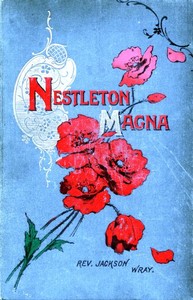
This digital edition of Nestleton Magna: A Story of Yorkshire Methodism — Background and Themes is described by source-level measurements including 98,723 words, 7 hr 10 min estimated reading time, and 43 detected text sections.
The text analysis averages about 22.3 words per sentence, while the detected sections provide another way to judge how the source is divided.
Project Gutenberg metadata also associates the work with “Yorkshire (England) -- Fiction,” connecting these edition facts with the source record’s subject description.
Explore this collection
These alternatives are selected using recorded categories and estimated reading time.
About 451 minutes
Technology Airships Imagined Futures
103,516 recorded words. 21 minutes difference from this book's estimate.
View Gutenberg source #39452About 481 minutes
Technology Airships Imagined Futures
110,568 recorded words. 51 minutes difference from this book's estimate.
View Gutenberg source #40142About 371 minutes
Technology Airships Imagined Futures
85,199 recorded words. 59 minutes difference from this book's estimate.
View Gutenberg source #39983Search stored excerpts and compare books → Choose by your preferences →
Choices use stored catalog measurements. Estimates vary with reading speed. A shared category is a catalog label, not a claim that two books have the same argument or literary quality.
Search reads excerpt text stored with this catalog and links to its associated Gutenberg record. The connection is stored in the site database; this tool does not recheck that every excerpt is word-for-word identical to that external record. Excerpt search does not cover every chapter and does not verify historical publication dates.
Catalog snapshot checked: 2026-09-26. Coverage: 93 public books, 93 available source excerpts.
Calculated from edition completeness, EPUB availability, text structure and catalogue metadata. Not a user rating.
Total of 100 points, scaled to a 2.5-5.0 range. Editions with an empty description or a missing EPUB file are not scored.
Public-domain source text
The source text is kept in the dedicated reader, separate from this catalogue record and its commentary.
J. Jackson Wray's 'Nestleton Magna' opens with a preface that insists on its own fidelity: the book aims to present 'a faithful picture of village Methodism,' drawn from the author's 'intimate knowledge of Methodist rural life.' Wray names Nathan Blyth and Old Adam Olliver as characters who 'unconsciously stood for their portraits,' grounding the fiction in observed reality. Yet he also defends fiction itself as a vehicle for moral and religious instruction, quoting Bunyan to claim his work contains 'nothing but sound and honest Gospel strains.' This dual commitment—to accurate representation and to edifying purpose—shapes every page.
The East Yorkshire dialect is not mere local color; it is the medium through which faith is expressed and community is forged. When Adam Olliver exclaims 'Halleluia! Halleluia!' after hearing of a new preaching place, his speech is thick with regional forms: 'deean't knoa,' 'mitch,' 'wheer.' The donkey Balaam, tethered by a bridle, becomes a comic participant in the triumph, braying in response to Nathan's slap. Wray revised the dialect for this edition, suggesting its importance to the novel's authenticity. The language binds the characters to their place and to each other, making their shared joy palpable.
The excerpt centers on a single piece of news: a new venue for Methodist services has been secured in Midden Harbour. Nathan Blyth calls it 'a miracle,' and the reaction is ecstatic. Adam Olliver's first thought is of God's faithfulness: 'He nivver was woss then His wod yit.' The scene is structured around a series of exclamations and physical gestures—Nathan slaps Balaam's haunch, the donkey brays, Adam laughs 'heartily.' Farmer Houston arrives to find 'ivverything's oop! Methodism's oop!' The moment is both a plot development and a ritual of communal affirmation, where the mundane act of securing a room becomes a providential event.
Wray's preface is a revealing document. He acknowledges that fiction is 'the most attractive' kind of literature and that readers will seek it out; therefore, he argues, it should be 'provided of so pure a quality' that it does good. This defensive stance suggests the novel was written for a readership that might distrust storytelling. Wray also notes the 'rapid sale' of earlier editions and the 'numerous criticisms' they received, which prompted his revision. The preface thus frames the novel as both a labor of love and a response to external pressures, a work that must justify its own existence as a vehicle for 'the highest interests of humanity.'
Readers approaching 'Nestleton Magna' should attend to the interplay between its didactic aims and its vivid, often humorous, depictions of rural life. The dialect rewards slow reading, and the scenes of collective celebration—like the one at the forge—offer entry points into the novel's emotional core. Wray's preface provides a key to his intentions, but the fiction itself may exceed them, offering pleasures that are not strictly 'Gospel strains.'
There are moments in Nestleton Magna—that quiet triumph of dialect and devotion—that remind me of wide, sunlit lands, where faith settles into the soil differently. It isn’t the chapel bells but the wind I hear, carrying a similar stubbornness of community. I found myself thinking of Alamo Ranch: A Story of New Mexico — Context and Discussion, not for its story, but for that same unhurried pulse of belonging.
Use these questions to collect your thoughts before moving on.