About 292 minutes
The House Opposite: A Mystery — A Reader’s Guide
Technology Airships Imagined Futures
66,954 recorded words. 0 minutes difference from this book's estimate.
View Gutenberg source #41525
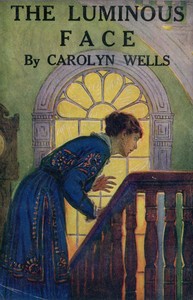
The Luminous Face — Reading Companion can be approached with a clearer sense of reading commitment from its source measurements: 67,028 words, 4 hr 52 min estimated reading time, and 7 detected text sections.
The text analysis averages about 12.0 words per sentence, while the detected sections provide another way to judge how the source is divided.
Project Gutenberg metadata also associates the work with “Detective and mystery stories,” connecting these edition facts with the source record’s subject description.
Explore this collection
These alternatives are selected using recorded categories and estimated reading time.
About 292 minutes
Technology Airships Imagined Futures
66,954 recorded words. 0 minutes difference from this book's estimate.
View Gutenberg source #41525About 301 minutes
Technology Airships Imagined Futures
69,188 recorded words. 9 minutes difference from this book's estimate.
View Gutenberg source #42807About 311 minutes
Technology Airships Imagined Futures
71,515 recorded words. 19 minutes difference from this book's estimate.
View Gutenberg source #42109Search stored excerpts and compare books → Choose by your preferences →
Choices use stored catalog measurements. Estimates vary with reading speed. A shared category is a catalog label, not a claim that two books have the same argument or literary quality.
Search reads excerpt text stored with this catalog and links to its associated Gutenberg record. The connection is stored in the site database; this tool does not recheck that every excerpt is word-for-word identical to that external record. Excerpt search does not cover every chapter and does not verify historical publication dates.
Catalog snapshot checked: 2026-09-26. Coverage: 93 public books, 93 available source excerpts.
Calculated from edition completeness, EPUB availability, text structure and catalogue metadata. Not a user rating.
Total of 100 points, scaled to a 2.5-5.0 range. Editions with an empty description or a missing EPUB file are not scored.
Public-domain source text
The source text is kept in the dedicated reader, separate from this catalogue record and its commentary.
The novel begins not with a crime but with a debate: three men in a club lounge argue about the likelihood of solving murders. Pollard insists Mellen's case remains open; Doctor Davenport scoffs at statistics; artist Phil Barry doodles on his paper. Their conversation establishes a world where murder is discussed as an intellectual puzzle, and where every character will later become a suspect. The opening chapter, titled 'Doctor Fell,' signals the arrival of detective Pennington Wise, but the excerpts show him absent from the early pages—the mystery is first filtered through the suspicions of those who knew the victim.
The first excerpt introduces a group of men whose casual talk about murder soon implicates them all. Pollard, who declares Mellen's death unsolved, later becomes a suspect himself. Barry, the artist, draws caricatures while discussing statistics—a detail that hints at his observant nature and his later entanglement in forged letters. The club setting is crucial: it is a closed circle where alibis are checked, typewriters are shared, and accusations fly. When Barry claims to have seen Pollard near the crime scene, Phyllis immediately questions his motive. The reader is drawn into a web of mutual suspicion, where every statement is a potential clue or a deliberate misdirection.
Millicent Lindsay, the victim's sister, is portrayed as emotionally volatile and quick to change her suspicions. In the second excerpt, she accuses her stepdaughter Phyllis, then Ivy Hayes, then Philip Barry, then returns to Phyllis. Her brother Louis remarks that she is 'quite capable of believing every one of us killed Gleason.' This pattern of shifting blame serves a narrative purpose: it keeps the reader uncertain and mirrors the detective's own process of elimination. Millicent's insistence on discussing the murder at every opportunity also creates tension in domestic scenes, where tea and conversation are punctuated by sudden accusations.
Phyllis Lindsay, the stepdaughter, repeatedly asks for an advance on her inheritance—twenty thousand dollars—without explaining why. This financial motive is introduced early and resurfaces in the second excerpt, where she is 'harping on that all day.' The mystery of her need for ready cash is a thread that runs through the excerpts, linking her to the murder investigation. When Pollard offers to advance her the money, she refuses to state her purpose. This secrecy, combined with her evident distress, makes her a plausible suspect. The author uses Phyllis's financial predicament to deepen the plot without revealing its connection to the crime.
A key piece of evidence is a typed letter signed by Philip Barry, which he denies writing. Louis Lindsay points out that the signature is unmistakably Barry's and that the typewriter used is the one in the club writing room—a machine accessible to all. This detail introduces the theme of traceable evidence: typing, like handwriting, can be identified. The letter becomes a point of contention, with Barry's troubled demeanor suggesting he knows more than he admits. The excerpts do not reveal the letter's contents, but its existence creates a tangible clue that the detective must weigh against the shifting testimonies of the suspects.
Readers approaching The Luminous Face should pay close attention to the early clubroom dialogue, which establishes the rules of the mystery: every character is a potential suspect, and every statement may be a clue or a lie. The excerpts show a story driven by conversation and accusation rather than action, with the detective's presence felt only indirectly. The title itself—referring to a 'luminous face'—remains unexplained in the provided text, a puzzle that awaits the full narrative.
That rainy afternoon, the typed letters in The Luminous Face felt like whispers I couldn’t quite place. After finishing, my hand drifted to another volume on the shelf, drawn by that same shiver of concealed urgency. Number 70, Berlin: A Story of Britain's Peril — Inside the Classic held a different kind of menace, less parlor game, more breath held in the dark. I still think of both on gray days.
Create a short personal record of your experience with this book.