About 292 minutes
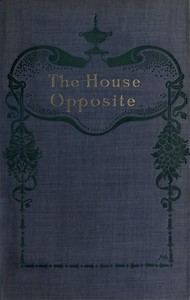
The House Opposite: A Mystery — A Reader’s Guide
Technology Airships Imagined Futures
66,954 recorded words. 9 minutes difference from this book's estimate.
View Gutenberg source #41525
For The Mystery of the Clasped Hands: A Novel — Edition Insights, the stored edition analysis reports 69,188 words, 5 hr 1 min estimated reading time, and 7 detected text sections.
The text analysis averages about 16.3 words per sentence, while the detected sections provide another way to judge how the source is divided.
Project Gutenberg metadata also associates the work with “Fiction,” connecting these edition facts with the source record’s subject description.
Explore this collection
These alternatives are selected using recorded categories and estimated reading time.
About 292 minutes
Technology Airships Imagined Futures
66,954 recorded words. 9 minutes difference from this book's estimate.
View Gutenberg source #41525About 292 minutes
Technology Airships Imagined Futures
67,028 recorded words. 9 minutes difference from this book's estimate.
View Gutenberg source #42714About 311 minutes
Technology Airships Imagined Futures
71,515 recorded words. 10 minutes difference from this book's estimate.
View Gutenberg source #42109Search stored excerpts and compare books → Choose by your preferences →
Choices use stored catalog measurements. Estimates vary with reading speed. A shared category is a catalog label, not a claim that two books have the same argument or literary quality.
Search reads excerpt text stored with this catalog and links to its associated Gutenberg record. The connection is stored in the site database; this tool does not recheck that every excerpt is word-for-word identical to that external record. Excerpt search does not cover every chapter and does not verify historical publication dates.
Catalog snapshot checked: 2026-09-26. Coverage: 93 public books, 93 available source excerpts.
Calculated from edition completeness, EPUB availability, text structure and catalogue metadata. Not a user rating.
Total of 100 points, scaled to a 2.5-5.0 range. Editions with an empty description or a missing EPUB file are not scored.
Public-domain source text
The source text is kept in the dedicated reader, separate from this catalogue record and its commentary.
The novel opens with a quarrel between two friends over dining habits, establishing a sharp contrast in temperament. Godfrey Henderson, a painter who rows and watches prize fights, is chided by Victor Fensden for his insularity. Fensden, who relishes "burrowing about among the small restaurants" of Soho, defends his cosmopolitan tastes. This early exchange, laced with ironic banter, sets up a dynamic that will later sour into betrayal.
The opening dialogue reveals character through rhythm and diction. Henderson speaks in blunt, physical terms—"chop or steak," "dangers of washing"—while Fensden uses abstract, intellectual phrasing: "affording me food for reflection." Henderson's friend calls him "insular" and a "stolid British prig," yet the narrative voice aligns with Henderson's perspective, describing him as "one of the most promising of our younger painters." This split between how characters speak and how the narrator judges them creates an early tension. Fensden's narrow shoulders and cigarette smoke contrast with Henderson's athleticism, hinting at a rivalry that will escalate.
The story moves from the leisurely Soho restaurant scene to a tense legal consultation. In the first excerpt, the pace is conversational, with long speeches and descriptive asides. By the second excerpt, the lawyer Mr. Codey takes control, speaking in clipped, analytical sentences: "Let us regard the facts of the case." The setting changes from a foreign eating-house to a closed-door office, and the tone shifts from banter to accusation. Codey's methodical reconstruction of events—Henderson's hiring of a model, the trip to Naples, the engagement—accelerates the narrative, compressing months of backstory into a few paragraphs. This structural shift mirrors the transition from social comedy to legal thriller.
Throughout the excerpts, characters are preoccupied with being watched and with the weight of testimony. Henderson checks his watch and notes the empty street; the lawyer plans to have a man "walk it quickly to-morrow morning" to test an alibi. Fensden's evidence is described as "unnecessarily damaging," and the lawyer warns that public opinion already suspects Henderson. Even the opening banter touches on conspiracy: "Nihilists, Anarchists, members of the Mafia." These details build a world where every action may be observed and used. The clasped hands of the title—likely a clue or symbol—are never mentioned in these excerpts, but the pattern of scrutiny suggests they will be central to the mystery.
Readers should attend to how Boothby uses dialogue to advance plot and character simultaneously. The early scenes reward attention to verbal sparring, while later sections demand careful tracking of alibis and motives. The excerpts leave the murder unsolved and the title unexplained, inviting speculation about how the clasped hands will connect to the web of accusations.
Years between their worlds, yet both know this ache: how a whispered word can bind a soul tighter than any chain. That queer Soho testimony lingers beside me like a spectral debt, much as the tangled fortunes of the Wentworths do. Both whisper of judgment circling innocent hearts. They sit together on my shelf, The Weird of the Wentworths: A Tale of George IV's Time, Vol. 2 — A Closer Reading keeping quiet company with Boothby’s shadowed painter.
Capture what you thought, learned, and would like to remember.