About 395 minutes
The Angel — Background and Themes
Historical Social Novels
90,712 recorded words. 8 minutes difference from this book's estimate.
View Gutenberg source #40571
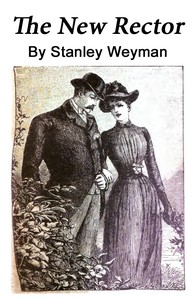
This digital edition of The New Rector — Inside the Classic is described by source-level measurements including 88,950 words, 6 hr 27 min estimated reading time, and 27 detected text sections.
The text analysis averages about 15.2 words per sentence, while the detected sections provide another way to judge how the source is divided.
Project Gutenberg metadata also associates the work with “England -- Social life and customs -- 19th century -- Fiction,” connecting these edition facts with the source record’s subject description.
Explore this collection
These alternatives are selected using recorded categories and estimated reading time.
About 395 minutes
Historical Social Novels
90,712 recorded words. 8 minutes difference from this book's estimate.
View Gutenberg source #40571About 399 minutes
Historical Social Novels
91,623 recorded words. 12 minutes difference from this book's estimate.
View Gutenberg source #41168About 365 minutes
Historical Social Novels
83,905 recorded words. 22 minutes difference from this book's estimate.
View Gutenberg source #39865Search stored excerpts and compare books → Choose by your preferences →
Choices use stored catalog measurements. Estimates vary with reading speed. A shared category is a catalog label, not a claim that two books have the same argument or literary quality.
Search reads excerpt text stored with this catalog and links to its associated Gutenberg record. The connection is stored in the site database; this tool does not recheck that every excerpt is word-for-word identical to that external record. Excerpt search does not cover every chapter and does not verify historical publication dates.
Catalog snapshot checked: 2026-09-26. Coverage: 93 public books, 93 available source excerpts.
Calculated from edition completeness, EPUB availability, text structure and catalogue metadata. Not a user rating.
Total of 100 points, scaled to a 2.5-5.0 range. Editions with an empty description or a missing EPUB file are not scored.
Public-domain source text
The source text is kept in the dedicated reader, separate from this catalogue record and its commentary.
The novel opens not with the new rector's arrival but with the death of his predecessor, Mr. Williams, and a playful meditation on where the living of Claversham resides during the interregnum. The narrator's tone is wry and digressive, speculating that the living might be 'in the prescience of the patron'—Lord Dynmore, whose whereabouts are comically uncertain, described as 'in the Cordilleras' or 'on the slopes of the Andes' by his solicitors. This opening establishes a voice that is both ironic and attentive to the social mechanics of a small town.
The catalog subjects list 'England -- Social life and customs -- 19th century' and 'Clergy -- England -- Fiction,' but the excerpts show that the clergy's role is immediately entangled with property disputes and parish politics, not merely spiritual duties. The late rector's 'placid life' contrasts with the conflict brewing around his successor.
The excerpts reveal a central conflict over sheep grazing in the churchyard. The new rector, Lindo, turns the sheep out, prompting Mr. Bonamy to serve him with a writ. This mundane dispute becomes a flashpoint for broader tensions. The narrator notes Lindo's 'long-tailed black coat flapping behind him' as he strides about town, a detail that underscores his clerical identity and his assertive, almost theatrical, presence. The sheep incident is discussed by characters like Kate and Daintry, who describe Lindo's 'iniquities' with a mixture of resentment and reluctant admiration. Jack Smith, a visitor from London, observes that 'the old man has been putting his foot in it here,' suggesting that Lindo's actions are seen as missteps by the community. The conflict is not merely legal but social, as Lindo's 'Varsity prejudices' lead him to 'exaggerate the ignorance of Claversham.' The sheep thus symbolize the clash between the rector's authority and local customs.
The excerpts offer distinct character voices that reveal social dynamics. Kate Bonamy speaks with 'subdued radiance' and a careful indifference when discussing Lindo, while her sister Daintry is more direct, stating, 'He is too big a swell for us.' This class-conscious remark hints at the rector's perceived aloofness. Jack Smith, a sharp-featured Londoner, serves as an outsider who draws out the story of Lindo's 'iniquities' through casual questioning. His reaction—whistling and calling Lindo 'the very best of fellows'—shows a divided opinion. The dialogue is naturalistic, with interruptions and gestures: Daintry 'rubbed herself shyly against Kate’s chair' when pressed. These interactions suggest a community where personal loyalties are strained by the rector's actions. The excerpts do not reveal the outcome of the writ or the bazaar mentioned, but they establish a web of relationships that will likely drive the plot.
The narrator's voice is a distinctive feature, blending irony with affection for the town's foibles. The opening chapter's discussion of Lord Dynmore's whereabouts—'his memory was so notably eccentric'—sets a tone of gentle mockery toward authority figures. The solicitors Gearns & Baker are portrayed as parochial, their 'walk in life' confined to Lincoln's Inn Fields, so that Clare Market seems 'an uncivilized country.' This humor extends to the living's location during the interregnum, which the narrator admits 'we do not know.' Such asides create a sense of intimacy with the reader, as if sharing a joke. The tone is consistent in later excerpts, where Lindo 'hugged himself more than ever on the one thing which his opponents could not take from him'—his rectorship. This internal perspective contrasts with the external conflicts, suggesting a man who is both confident and isolated. The narrator's voice thus shapes the reader's understanding of events, offering a lens that is both critical and sympathetic.
Readers attentive to the novel's social texture will find that the excerpts reward close attention to dialogue and narrative asides. The sheep dispute, the bazaar preparations, and the arrival of Jack Smith all hint at a plot driven by misunderstandings and class friction. Weyman's prose is economical yet evocative, using small details—a coat flapping, a chair pushed awry—to convey character. The incomplete excerpts leave the resolution of Lindo's conflicts unknown, but the groundwork is laid for a story about a man navigating a community that resists change.
I remember the way Weyman’s rector walks into Claversham, carrying his quiet certainty like a coat he hasn’t yet outgrown. Something in that solitary dignity lingers next to another story, where an equal stubbornness meets an even harsher judgment. They are distant neighbours, these two, sharing a shadowed respect for consequences. An Eye for an Eye — Inside the Classic sits well beside it on the shelf, both whispering of duty’s cost.
Build a private reading journal entry for this title.