About 543 minutes
Regiment of Women — A Reader’s Guide
Historical Social Novels
124,826 recorded words. 4 minutes difference from this book's estimate.
View Gutenberg source #40264
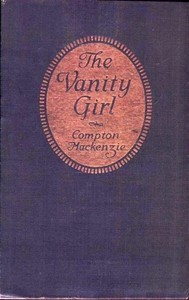
The catalog record for The Vanity Girl — Inside the Classic provides practical reading context through 123,917 words, 8 hr 59 min estimated reading time, and 11 detected text sections.
The text analysis averages about 19.8 words per sentence, while the detected sections provide another way to judge how the source is divided.
Project Gutenberg metadata also associates the work with “England -- Social life and customs -- 20th century -- Fiction,” connecting these edition facts with the source record’s subject description.
Explore this collection
These alternatives are selected using recorded categories and estimated reading time.
About 543 minutes
Historical Social Novels
124,826 recorded words. 4 minutes difference from this book's estimate.
View Gutenberg source #40264About 543 minutes
Historical Social Novels
124,670 recorded words. 4 minutes difference from this book's estimate.
View Gutenberg source #42222About 528 minutes
Historical Social Novels
121,400 recorded words. 11 minutes difference from this book's estimate.
View Gutenberg source #40014Search stored excerpts and compare books → Choose by your preferences →
Choices use stored catalog measurements. Estimates vary with reading speed. A shared category is a catalog label, not a claim that two books have the same argument or literary quality.
Search reads excerpt text stored with this catalog and links to its associated Gutenberg record. The connection is stored in the site database; this tool does not recheck that every excerpt is word-for-word identical to that external record. Excerpt search does not cover every chapter and does not verify historical publication dates.
Catalog snapshot checked: 2026-09-26. Coverage: 93 public books, 93 available source excerpts.
Calculated from edition completeness, EPUB availability, text structure and catalogue metadata. Not a user rating.
Total of 100 points, scaled to a 2.5-5.0 range. Editions with an empty description or a missing EPUB file are not scored.
Public-domain source text
The source text is kept in the dedicated reader, separate from this catalogue record and its commentary.
Compton Mackenzie opens The Vanity Girl with a deliberately unromantic portrait of West Kensington, where romance depends on 'the eccentricities of individual residents' rather than the scenery. The novel's first chapter establishes a tone of wry social observation, noting how Lonsdale Road 'obtrude[s] itself upon the flimsy architecture of the neighborhood.' This attention to place and class sets the stage for Dorothy Caffyn's ascent.
The dedication to Fay Compton, the author's sister, playfully deflects gossip that she wrote the novel or inspired its heroine—a meta-fictional gesture that hints at the novel's interest in reputation and performance. The excerpts show a narrator who relishes digressive history, such as the tangled genealogy of the Clare family and their chapel-of-ease, blending satire with a connoisseur's eye for detail.
The opening pages root Dorothy's story in a specific geography. Mackenzie describes West Kensington as a place where 'uniform gray or red houses' are 'drearily elongated by constriction,' yet he notes surviving relics of rusticity—'a row of old cottages, here and there a Georgian house.' This tension between the mundane and the aspirational mirrors Dorothy's own trajectory. The narrator's voice is precise and slightly arch, observing that the suburb 'relies for romance more upon the eccentricities of individual residents than upon any variety or suggestiveness in the scenery.' Such phrasing signals a novel more interested in character and social nuance than in plot mechanics. Readers should note how the physical setting—the 'sooty flower-gardens' and 'rusty cedars'—functions as a metaphor for the constrained lives the heroine seeks to escape.
A striking feature of the middle excerpts is Mackenzie's deployment of church history as a vehicle for social satire. The rector Mr. Beadon recounts the dubious lineage of the Clare family's ecclesiastical benefices: the first earl built a 'chapel-of-ease' to secure divine favor, then presented the living to his natural son, who paid a curate £40 a year and was 'last seen in an intoxicated condition on the quay of Boulogne harbor.' The present incumbent is anxious about introducing 'colored vestments' and 'linen vestments' for early services. This digression—delivered while the heroine is out of earshot—serves multiple purposes: it characterizes the rector as a gossip, the dowager as a sentimentalist, and the Clare family as a dynasty of pragmatic self-interest. The chlorotic Burne-Jones window and the tart remark about Mrs. Kingdon's organ memorial further underscore the novel's amused, detached tone.
Chapter II marks a clear shift in perspective and pace. Dorothy, now a countess, is traveling west on the express, leaving her old life behind 'more rapidly and with less regret than the country through which the train was traveling.' Mackenzie uses a compressed simile—'Happiness always widens the waist of an hour-glass'—to convey her subjective experience of time. The narrator reports that onlookers, informed by a waiter of her identity, 'commented upon her radiant air' and decided 'with that credulous sentimentality imported into Great Britain with Hengist and Horsa that she must be very deeply in love.' This wry aside undercuts the romantic reading of her happiness, suggesting instead that her joy may be as much about status as about affection. The passage invites readers to question the authenticity of Dorothy's emotions and the motives of those around her.
Throughout the excerpts, Mackenzie's narrator maintains a distinctive voice: urbane, slightly cynical, and attentive to the absurdities of class performance. The dedication to Fay Compton—which anticipates accusations that she wrote the novel or inspired the heroine—establishes a playful, self-aware frame. The narrator's digressions, such as the history of the Clare borough's disfranchisement in 1832, are not mere padding but serve to embed the characters in a dense social fabric. The description of the second earl who 'destroyed a couple of good farms to provide himself with a park' and the third earl who 'showed the Whigs that the disfranchisement of his borough was not enough to keep a Clare out of Parliament' reveals a family history of strategic adaptation. Readers should attend to how these historical asides illuminate the present action, particularly the dowager's anxiety about her son's marriage and the rector's maneuvering for preferment.
The excerpts from The Vanity Girl suggest a novel that rewards attention to its narrative voice and its layered social commentary. Mackenzie's prose moves between precise observation and ironic aside, using ecclesiastical history, architectural detail, and the heroine's own radiant composure to build a portrait of ambition and its discontents. Readers may find it useful to track how the narrator's tone shifts between the opening chapters and later sections, and to consider whether Dorothy's happiness remains as uncomplicated as it first appears.
The way Dorothy’s gilded cage slowly closes in The Vanity Girl reminds me of another quiet ache—watching someone trade their own horizon for a title. John Burnet of Barns: A Romance — Text and Context carries that same gentle sorrow, but older, wilder, like moss on stone. Both left me sitting with the cost of becoming someone else.
Save your reaction, strongest insight, and memorable passage.