About 539 minutes
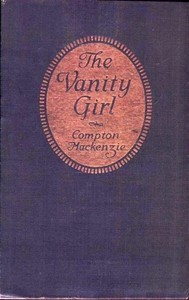
The Vanity Girl — Inside the Classic
Historical Social Novels
123,917 recorded words. 11 minutes difference from this book's estimate.
View Gutenberg source #39422

For John Burnet of Barns: A Romance — Text and Context, the stored edition analysis reports 121,400 words, 8 hr 48 min estimated reading time, and 14 detected text sections.
The text analysis averages about 21.0 words per sentence, while the detected sections provide another way to judge how the source is divided.
Project Gutenberg metadata also associates the work with “Historical fiction,” connecting these edition facts with the source record’s subject description.
Explore this collection
These alternatives are selected using recorded categories and estimated reading time.
About 539 minutes
Historical Social Novels
123,917 recorded words. 11 minutes difference from this book's estimate.
View Gutenberg source #39422About 543 minutes
Historical Social Novels
124,826 recorded words. 15 minutes difference from this book's estimate.
View Gutenberg source #40264About 543 minutes
Historical Social Novels
124,670 recorded words. 15 minutes difference from this book's estimate.
View Gutenberg source #42222Search stored excerpts and compare books → Choose by your preferences →
Choices use stored catalog measurements. Estimates vary with reading speed. A shared category is a catalog label, not a claim that two books have the same argument or literary quality.
Search reads excerpt text stored with this catalog and links to its associated Gutenberg record. The connection is stored in the site database; this tool does not recheck that every excerpt is word-for-word identical to that external record. Excerpt search does not cover every chapter and does not verify historical publication dates.
Catalog snapshot checked: 2026-09-26. Coverage: 93 public books, 93 available source excerpts.
Calculated from edition completeness, EPUB availability, text structure and catalogue metadata. Not a user rating.
Total of 100 points, scaled to a 2.5-5.0 range. Editions with an empty description or a missing EPUB file are not scored.
Public-domain source text
The source text is kept in the dedicated reader, separate from this catalogue record and its commentary.
The narrator opens with deliberate self-deprecation—'my memory at the best is a bad one'—yet immediately asserts a methodical design: his life, he claims, has unfolded 'in an order' that makes telling easier. This tension between confessed fallibility and claimed structure runs through the excerpts. Buchan builds the romance not on grand declarations but on the recovery of a remembered ballad: John whistles a stave, Marjory recalls the air, and the old promise is claimed as a practical plan for escape. The song's refrain—'bear him company'—becomes the hinge of the plot, transforming a sentimental memory into a decision to flee together.
The opening paragraph establishes a narrator who admits to a 'bad' memory yet insists his story has 'something of a method.' This paradox is not resolved; instead, Buchan lets the reader watch John Burnet shape his tale. The narrator addresses 'they of my family' as his intended audience, framing the book as both personal record and moral lesson. The excerpts show him interrupting action to reflect—on his own motives, on the 'vantage ground of time'—which gives the prose a retrospective weight. Yet the same narrator can be impulsive: he claims a promise, devises a plan, and acts without hesitation. This blend of introspection and decisiveness creates a voice that is both fallible and commanding.
The geography of the novel is not backdrop but active force. John Burnet moves between named places—Dawyck, Smitwood, the 'moss of Biggar'—each carrying specific associations of safety or threat. The hills are 'wide moors' where he can be 'free and careless,' while the house of Dawyck becomes a place of dread. Buchan uses precise topographical detail: the 'edge of Douglasdale,' the 'shire of Lanark,' the 'Cor Water.' These are not generic settings but a known landscape that the characters navigate with local knowledge. The plan to shelter Marjory at Smitwood depends on a web of kinship and secrecy—'no word should come to his ear of her destined harbour'—showing how terrain and family ties together determine the plot's possibilities.
In a key scene, John Burnet recalls a song Marjory once sang to him. He whistles the tune, quotes two verses, and then declares it a 'promise' he has come to claim. The ballad's refrain—'bear him company'—is literalized: Marjory agrees to follow him 'even to the world's end.' Buchan does not present this as sentimental; it is a practical negotiation. John reminds her of the words, she blushes, and then she consents to a dangerous journey. The song functions as a pre-existing bond, a shared text that justifies action. The narrator's careful retrieval of the verses—'I think, too, that I have mind of a verse or so'—echoes his earlier claim about memory, suggesting that what matters is not perfect recall but the willingness to use what one remembers.
Readers should attend to the way Buchan balances the narrator's retrospective calm with the urgency of the events he describes. The excerpts show a story that moves between intimate conversation and swift action, between the safety of a remembered song and the exposure of the moors. The landscape is never merely picturesque; it is a system of refuges and traps. The romance is built not on passion but on a pact renewed through quotation, and the tension between John's self-doubt and his resolve gives the narrative its distinctive pulse.
There’s something about John Burnet of Barns that stays, the way old ballads do—that pull between a settled life and the wild hills, love bound to place. I found myself thinking of that ache again while reading Scarlet and Hyssop: A Novel — Context and Discussion. It lingers differently, but it lingers. Maybe you’ll feel that weight too, quietly.
Use these questions to collect your thoughts before moving on.