About 543 minutes
Regiment of Women — A Reader’s Guide
Historical Social Novels
124,826 recorded words. 0 minutes difference from this book's estimate.
View Gutenberg source #40264
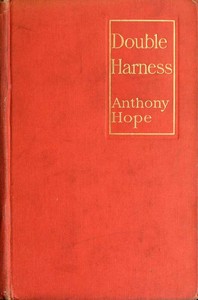
For Double Harness — Inside the Classic, the stored edition analysis reports 124,670 words, 9 hr 3 min estimated reading time, and 11 detected text sections.
The text analysis averages about 13.2 words per sentence, while the detected sections provide another way to judge how the source is divided.
Project Gutenberg metadata also associates the work with “England -- Social life and customs -- Fiction,” connecting these edition facts with the source record’s subject description.
Explore this collection
These alternatives are selected using recorded categories and estimated reading time.
About 543 minutes
Historical Social Novels
124,826 recorded words. 0 minutes difference from this book's estimate.
View Gutenberg source #40264About 539 minutes
Historical Social Novels
123,917 recorded words. 4 minutes difference from this book's estimate.
View Gutenberg source #39422About 528 minutes
Historical Social Novels
121,400 recorded words. 15 minutes difference from this book's estimate.
View Gutenberg source #40014Search stored excerpts and compare books → Choose by your preferences →
Choices use stored catalog measurements. Estimates vary with reading speed. A shared category is a catalog label, not a claim that two books have the same argument or literary quality.
Search reads excerpt text stored with this catalog and links to its associated Gutenberg record. The connection is stored in the site database; this tool does not recheck that every excerpt is word-for-word identical to that external record. Excerpt search does not cover every chapter and does not verify historical publication dates.
Catalog snapshot checked: 2026-09-26. Coverage: 93 public books, 93 available source excerpts.
Calculated from edition completeness, EPUB availability, text structure and catalogue metadata. Not a user rating.
Total of 100 points, scaled to a 2.5-5.0 range. Editions with an empty description or a missing EPUB file are not scored.
Public-domain source text
The source text is kept in the dedicated reader, separate from this catalogue record and its commentary.
The novel opens with a leisurely scene on the downs: Grantley Imason lies on the turf, a straw hat over his eyes, while his friend Tom Courtland complains about returning to his wife. The pace is unhurried, the dialogue satirical. Yet by the closing excerpt, the same Grantley delivers a cold ultimatum: if his wife Sibylla persists in leaving him for Frank Blake, he will kill Frank and himself. The shift from idle banter to mortal threat is stark, and it is accomplished almost entirely through changes in speech rhythm and physical stillness—Grantley’s hand on the table, his slow weighing of words.
The opening chapter establishes a tone of worldly irony. Courtland calls marriage “the devil of a business” and says it is “not worth a book—a page of strong and indiscriminate swearing.” Grantley’s response is a “faint sigh” and a “look of satirical amusement.” The prose is relaxed, the setting open and free. But as the novel progresses, the voice tightens. By the later excerpt, Grantley’s speech becomes measured and deliberate: “I don’t accept the position you propose for me.” The narrative no longer describes gestures of ease but of tension—a hand passed across the brow, a ring twisted on a finger. The change in pace is not abrupt but cumulative, mirroring a marriage moving from complacency to crisis.
Hope builds conflict through controlled verbal exchanges rather than physical action. In the climactic scene, Grantley and Sibylla speak in short, clipped sentences that escalate in weight. Sibylla declares their marriage a “life of sham and fraud and failure and heartbreak.” Grantley replies not with anger but with a question: “Have you thought of the consequences to me?” The dialogue is layered with subtext—Sibylla’s bitter laugh, Grantley’s “short laugh” when Blake fears violence. Each character uses words to probe, wound, or defend. Blake, by contrast, speaks in impatient, colloquial outbursts (“Don’t be so damned absurd”), marking him as an outsider to the couple’s more refined cruelty. The narrative voice remains detached, reporting speech without commentary, letting the reader gauge the shifting power dynamics.
Hope varies pace by alternating physical stillness with sudden movement. In the opening, Grantley lies “full length on his back” and later “sat up, put his hat on his head, and knocked out his pipe.” These small actions punctuate the dialogue. In the later scene, stillness dominates: Grantley “passed his hand across his brow—almost the first movement that he had made.” Sibylla “leant forward across the table,” while Blake “leant back with a scornful toss of his head.” The only abrupt motion is Blake’s “leaning forward, ready to spring up,” which Grantley defuses with a word. The narrative pace slows to a standstill around the ultimatum, then quickens with Blake’s laugh and Grantley’s smile. This choreography of stillness and gesture gives the confrontation its taut, theatrical quality.
Readers attentive to voice will notice how Hope uses register to distinguish characters: Grantley’s formal, almost legal phrasing (“I refuse them root and branch”) versus Sibylla’s emotional crescendos and Blake’s bluntness. The novel’s title, Double Harness, suggests a partnership of equal strain, and the excerpts bear this out—neither spouse is wholly sympathetic. The narrative never rushes to judgment, leaving the reader to weigh the consequences of pride and love as they unfold in the spaces between words.
I finished Double Harness and kept thinking about how silence in a marriage can speak louder than words. That same tension—the weight of things unsaid between people bound together—lingers in The Three Perils of Man; or, War, Women, and Witchcraft, Vol. 1 (of 3) — Themes and Context, where wit and witchcraft weave through human frailty. It stayed with me like a half-remembered conversation.
Create a short personal record of your experience with this book.