About 343 minutes
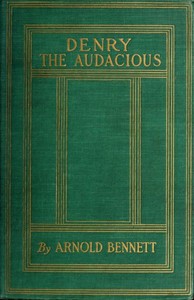
Denry the Audacious — Reading Notes
Exploration Survival Adventure Tales
78,762 recorded words. 12 minutes difference from this book's estimate.
View Gutenberg source #40103
The source record for The Riddle of the Mysterious Light — Reading Notes measures this digital text at 75,936 words, 5 hr 31 min estimated reading time, and 8 detected text sections.
The text analysis averages about 15.6 words per sentence, while the detected sections provide another way to judge how the source is divided.
Project Gutenberg metadata also associates the work with “Detective and mystery stories,” connecting these edition facts with the source record’s subject description.
Explore this collection
These alternatives are selected using recorded categories and estimated reading time.
About 343 minutes
Exploration Survival Adventure Tales
78,762 recorded words. 12 minutes difference from this book's estimate.
View Gutenberg source #40103About 356 minutes
Exploration Survival Adventure Tales
81,703 recorded words. 25 minutes difference from this book's estimate.
View Gutenberg source #42441About 357 minutes
Exploration Survival Adventure Tales
81,925 recorded words. 26 minutes difference from this book's estimate.
View Gutenberg source #39857Search stored excerpts and compare books → Choose by your preferences →
Choices use stored catalog measurements. Estimates vary with reading speed. A shared category is a catalog label, not a claim that two books have the same argument or literary quality.
Search reads excerpt text stored with this catalog and links to its associated Gutenberg record. The connection is stored in the site database; this tool does not recheck that every excerpt is word-for-word identical to that external record. Excerpt search does not cover every chapter and does not verify historical publication dates.
Catalog snapshot checked: 2026-09-26. Coverage: 93 public books, 93 available source excerpts.
Calculated from edition completeness, EPUB availability, text structure and catalogue metadata. Not a user rating.
Total of 100 points, scaled to a 2.5-5.0 range. Editions with an empty description or a missing EPUB file are not scored.
Public-domain source text
The source text is kept in the dedicated reader, separate from this catalogue record and its commentary.
The opening pages of The Riddle of the Mysterious Light find Superintendent Narkom of Scotland Yard dozing in his unusually tidy office, a purple silk handkerchief draped over his head, dreaming of a seaside holiday. The peace is shattered by the arrival of a distraught Captain Kenneth Digby, whose secret experiments with smokeless powder are being betrayed to a foreign power. Cleek, introduced under the alias Lieutenant Deland, immediately grasps the core of the mystery—the word “smokeless” sparks a flash of insight—while Narkom remains baffled. The scene establishes the series’ formula: a calm domestic frame, a client in crisis, and Cleek’s rapid, almost theatrical deduction.
Cleek’s first appearance in the text is not as himself but as “a stout, elderly, seafaring man.” The disguise is so complete that Inspector Hammond, who has been longing for Cleek’s return, does not recognize him until Narkom cries out his name. This moment underscores a central trait of the character: he is a master of transformation, able to vanish into a role. Later, Cleek dons another disguise—that of Lieutenant Deland—to observe Captain Digby without revealing his identity. The narrative treats these changes matter-of-factly, as routine tools of the trade. The theatricality extends to Cleek’s mannerisms: he dives for a cigarette, twitches an eyebrow, and speaks in clipped, knowing phrases. The reader is invited to admire the performance as much as the detection.
Captain Kenneth Digby is introduced as “a fine, upstanding, manly-looking young soldier of about eight and twenty, a man with something of the scholar’s refinement.” His crisis is both professional and personal: his experiments with a new explosive formula are being leaked, and he is suspected of treason. The excerpt shows him nearly hysterical, declaring he will “kill myself in the end.” Cleek’s immediate interest in the word “smokeless” hints that the solution may lie in the science itself, not in conventional detective work. The story thus sets up a puzzle that blends espionage, chemistry, and loyalty. Notably, the narrative does not yet reveal whether Digby is innocent or guilty; it presents his distress as genuine, leaving the reader to weigh the evidence alongside Cleek.
The opening chapter paints a vivid picture of Scotland Yard in a rare state of calm. Narkom’s office is “reduced to a state of order and tidiness uncanny to behold,” and he is napping with a silk handkerchief over his face. The criminals have “betaken themselves to other haunts,” and the Superintendent is looking forward to two weeks in Margate with his family and friends, including Cleek and Ailsa Lorne. This domestic detail humanizes Narkom and contrasts sharply with the urgency of Digby’s case. The sudden intrusion of a national-security crisis disrupts the holiday mood, but Cleek’s arrival restores a sense of control. The setting reinforces the series’ pattern: the ordinary world of the Yard is a stage for extraordinary events, and Cleek is the actor who can restore order.
The excerpts offer only the first chapter and a table of contents, so the full shape of the mystery—the “mysterious light” of the title, the role of the Apaches, and the resolution of the Digby case—remains unknown. Readers should attend to how Cleek’s disguises and his intuitive leaps interact with the scientific and espionage elements introduced here. The story promises a blend of ratiocination and theatricality that defines the Cleek series.
There's something almost melancholy about Cleek slipping into his disguises, always performing rather than simply being. It's a theme that lingers, the cost of a life spent in costume. That same quiet ache surfaces again in the old stories gathered in The Youth of Parnassus, and Other Stories — Edition Insights, where youth itself feels like the trickiest role of all.
Use these questions to collect your thoughts before moving on.