About 260 minutes
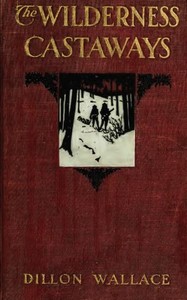
The Wilderness Castaways — A Reader’s Guide
Exploration Survival Adventure Tales
59,719 recorded words. 2 minutes difference from this book's estimate.
View Gutenberg source #42382
The source record for The Zeppelin Destroyer: Being Some Chapters of Secret History — Reading Notes measures this digital text at 60,144 words, 4 hr 22 min estimated reading time, and 7 detected text sections.
The text analysis averages about 17.1 words per sentence, while the detected sections provide another way to judge how the source is divided.
Project Gutenberg metadata also associates the work with “World War, 1914-1918 -- Fiction,” connecting these edition facts with the source record’s subject description.
Explore this collection
These alternatives are selected using recorded categories and estimated reading time.
About 260 minutes
Exploration Survival Adventure Tales
59,719 recorded words. 2 minutes difference from this book's estimate.
View Gutenberg source #42382About 259 minutes
Exploration Survival Adventure Tales
59,382 recorded words. 3 minutes difference from this book's estimate.
View Gutenberg source #41790About 252 minutes
Exploration Survival Adventure Tales
57,733 recorded words. 10 minutes difference from this book's estimate.
View Gutenberg source #41186Search stored excerpts and compare books → Choose by your preferences →
Choices use stored catalog measurements. Estimates vary with reading speed. A shared category is a catalog label, not a claim that two books have the same argument or literary quality.
Search reads excerpt text stored with this catalog and links to its associated Gutenberg record. The connection is stored in the site database; this tool does not recheck that every excerpt is word-for-word identical to that external record. Excerpt search does not cover every chapter and does not verify historical publication dates.
Catalog snapshot checked: 2026-09-26. Coverage: 93 public books, 93 available source excerpts.
Calculated from edition completeness, EPUB availability, text structure and catalogue metadata. Not a user rating.
Total of 100 points, scaled to a 2.5-5.0 range. Editions with an empty description or a missing EPUB file are not scored.
Public-domain source text
The source text is kept in the dedicated reader, separate from this catalogue record and its commentary.
The novel opens with aviator Claude Munro and his friend Teddy Ashton smoking "gasper" cigarettes in a Hendon aeroplane factory, discussing a near-fatal spin caused by a wind-pocket at eight thousand feet. The casual banter—"To-morrow? Why, there may not be a to-morrow for you"—establishes a tone of fatalistic bravado common in early aviation fiction. Munro, a wireless enthusiast turned pilot, embodies the era's fascination with new technology, while his father's initial resistance to flying echoes contemporary anxieties about the profession's risks.
Le Queux grounds the narrative in the physical and social world of wartime aviation. The opening scene in the Barwick Aeroplane Factory at Hendon includes specific details: monoplanes, wind-proof suits, leather caps, and goggles pushed up on brows. The dialogue is peppered with period slang—"gasper" for cigarette, "old bus" for aircraft, "quirk" for a novice pilot. These terms, along with references to Brooklands flying school and the "excellent Verrier" who first took Munro up, create a documentary texture. The factory's half-finished machines and the mention of engine trouble and "dope" for fabric coating suggest a world where mechanical reliability is uncertain and danger is routine.
A recurring motif is the mysterious woman Roseye believes she sees—a figure with "crafty eyes of a leopard." Roseye insists this woman was present at Hendon and intends harm. The description is deliberately vague: the woman is sensed rather than seen clearly, and Roseye's terror is conveyed through her "blank, yet horrified expression." Le Queux uses this figure to generate suspense without revealing her nature or purpose. The phrase "Woman with the Leopard's Eyes" appears as a capitalized epithet, marking her as a symbolic threat. Whether she is real, a hallucination, or a product of Roseye's trauma is left ambiguous in the excerpts, inviting readers to speculate.
Roseye's return in unfamiliar clothes—a jersey and skirt she does not recognize—highlights her disorientation. She cannot recall where she has been, and her chatelaine (a purse or ornament) was found on railway tracks near Welwyn. Munro's attempts to jog her memory by mentioning the chatelaine produce only a partial reaction: she remembers something but refuses to disclose it. Her repeated plea for forgiveness and her inability to explain her absence create a central mystery. The railway setting—a signalman's story of two women struggling on a train—adds a layer of possible violence or coercion. Le Queux leaves Roseye's past deliberately opaque, using her fragmented memory to drive the plot forward.
Readers should attend to the interplay between technical aviation detail and psychological suspense. Le Queux balances descriptions of aircraft testing with a personal mystery that unfolds through dialogue and gesture rather than action. The incomplete excerpts leave key questions unanswered—the nature of the leopard-eyed woman, Roseye's lost time, and the secret history promised in the subtitle—making the novel a puzzle that rewards careful attention to small clues and recurring imagery.
That rainy afternoon, the Zeppelin novel’s frantic wartime skies felt oddly muffled by the drumming on my window. It was exhausting, all that urgency. But when Munro paused, distracted by the absurdity of his own secret mission, I remembered another restless character, and reached for Denry the Audacious — Reading Notes. That book laughed at the same grandness, quieter, and much more human.
Your answers remain private and are stored only in this browser.