About 259 minutes
Quintus Oakes: A Detective Story — Edition Insights
Exploration Survival Adventure Tales
59,382 recorded words. 1 minutes difference from this book's estimate.
View Gutenberg source #41790
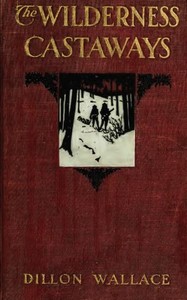
The Wilderness Castaways — A Reader’s Guide can be approached with a clearer sense of reading commitment from its source measurements: 59,719 words, 4 hr 20 min estimated reading time, and 7 detected text sections.
The text analysis averages about 14.8 words per sentence, while the detected sections provide another way to judge how the source is divided.
Project Gutenberg metadata also associates the work with “Canada, Eastern -- Description and travel -- Fiction,” connecting these edition facts with the source record’s subject description.
Explore this collection
These alternatives are selected using recorded categories and estimated reading time.
About 259 minutes
Exploration Survival Adventure Tales
59,382 recorded words. 1 minutes difference from this book's estimate.
View Gutenberg source #41790About 262 minutes
Exploration Survival Adventure Tales
60,144 recorded words. 2 minutes difference from this book's estimate.
View Gutenberg source #40995About 252 minutes
Exploration Survival Adventure Tales
57,733 recorded words. 8 minutes difference from this book's estimate.
View Gutenberg source #41186Search stored excerpts and compare books → Choose by your preferences →
Choices use stored catalog measurements. Estimates vary with reading speed. A shared category is a catalog label, not a claim that two books have the same argument or literary quality.
Search reads excerpt text stored with this catalog and links to its associated Gutenberg record. The connection is stored in the site database; this tool does not recheck that every excerpt is word-for-word identical to that external record. Excerpt search does not cover every chapter and does not verify historical publication dates.
Catalog snapshot checked: 2026-09-26. Coverage: 93 public books, 93 available source excerpts.
Calculated from edition completeness, EPUB availability, text structure and catalogue metadata. Not a user rating.
Total of 100 points, scaled to a 2.5-5.0 range. Editions with an empty description or a missing EPUB file are not scored.
Public-domain source text
The source text is kept in the dedicated reader, separate from this catalogue record and its commentary.
From its opening scene—Captain Bluntt roaring at Dan Rudd to stow his harmonica—The Wilderness Castaways establishes a world where authority and impulse clash. The shipboard hierarchy gives way to a more fluid partnership once the protagonists are cast adrift, but the contrast between Dan's Newfoundland dialect and Paul's measured speech persists throughout the excerpts, marking a deeper tension between experience and education.
The excerpts reveal two distinct registers. Dan Rudd speaks in a thick maritime dialect: “If a feller gets game he’s got t’ keep after un when he sees un.” Paul, by contrast, uses standard English: “I’ve learned to love the sea, in spite of the rough way it’s knocked us about.” This linguistic divide is not merely decorative; it signals different relationships to the natural world. Dan’s speech is practical, rooted in immediate action, while Paul’s is reflective, even aesthetic. When Dan declares a landscape “wonderful fine,” Paul calls it “immense.” The narrative does not privilege one voice over the other; instead, it lets both stand, creating a dialogue between doing and seeing.
The excerpts devote careful attention to the how of survival. When Dan prepares porcupine and lynx, the process is described step by step: singeing quills, scraping hides, building a log fire, suspending meat on strings before the flames. “By occasionally twirling the string upon which each was hung, every portion of the roasting meat was exposed to the heat.” This is not generic adventure padding; it is specific, procedural knowledge. Paul’s role is to observe and assist, learning under Dan’s direction. The narrative thus doubles as a manual of woodsman’s craft, embedding instruction within the story. The reader, like Paul, is being taught.
The book’s structure hinges on disruptions. The ship North Star is delayed by missing orders; later, a gale forces the castaways to wait three days before resuming their journey. These enforced pauses allow the narrative to dwell on camp routines and weather reading. Dan’s prophecy—“She’s blowin’ wonderful stiff outside”—proves accurate, and the delay yields a stockpile of food: forty ptarmigans, three snowshoe rabbits, and two porcupines. The wilderness imposes its own timetable, and the characters adapt. The tension between human schedules and natural rhythms is a recurring pattern, visible in the very structure of the chapters: wreck, abandonment, adrift, starvation, then recovery and shelter.
Readers will find that the novel’s interest lies less in plot twists than in the accumulation of small, concrete details: the feel of frost crackling underfoot, the method of roasting lynx, the way Dan’s dialect colors every exchange. Pay attention to what the characters do with their hands—building, hunting, cooking—as much as to what they say. The wilderness here is not a backdrop but a teacher, and the story’s real drama is the slow, patient work of learning its lessons.
There’s something about Rudd’s patient hands—splicing rope, banking a fire—that lingers after The Wilderness Castaways closes. I find myself thinking of that quiet competence whenever I wander through the crowded streets of The City of Masks — Inside the Classic, where everyone wears order like a coat against the wild. Dan would have seen right through them, and grinned.
Capture what you thought, learned, and would like to remember.