About 278 minutes
Blue-Stocking Hall, (Vol. 1 of 3) — Inside the Classic
Fantasy Juvenile Worlds
63,861 recorded words. 0 minutes difference from this book's estimate.
View Gutenberg source #40974
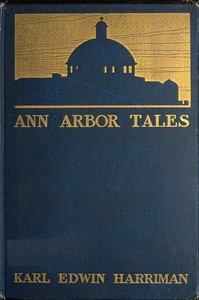
Ann Arbor Tales — Reading Notes can be approached with a clearer sense of reading commitment from its source measurements: 63,743 words, 4 hr 38 min estimated reading time, and 7 detected text sections.
The text analysis averages about 14.9 words per sentence, while the detected sections provide another way to judge how the source is divided.
Project Gutenberg metadata also associates the work with “Short stories, American,” connecting these edition facts with the source record’s subject description.
Explore this collection
These alternatives are selected using recorded categories and estimated reading time.
About 278 minutes
Fantasy Juvenile Worlds
63,861 recorded words. 0 minutes difference from this book's estimate.
View Gutenberg source #40974About 285 minutes
Fantasy Juvenile Worlds
65,432 recorded words. 7 minutes difference from this book's estimate.
View Gutenberg source #41415About 286 minutes
Fantasy Juvenile Worlds
65,695 recorded words. 8 minutes difference from this book's estimate.
View Gutenberg source #41529Search stored excerpts and compare books → Choose by your preferences →
Choices use stored catalog measurements. Estimates vary with reading speed. A shared category is a catalog label, not a claim that two books have the same argument or literary quality.
Search reads excerpt text stored with this catalog and links to its associated Gutenberg record. The connection is stored in the site database; this tool does not recheck that every excerpt is word-for-word identical to that external record. Excerpt search does not cover every chapter and does not verify historical publication dates.
Catalog snapshot checked: 2026-09-26. Coverage: 93 public books, 93 available source excerpts.
Calculated from edition completeness, EPUB availability, text structure and catalogue metadata. Not a user rating.
Total of 100 points, scaled to a 2.5-5.0 range. Editions with an empty description or a missing EPUB file are not scored.
Public-domain source text
The source text is kept in the dedicated reader, separate from this catalogue record and its commentary.
The collection begins with a detailed portrait of Florence, a young woman who receives guests in a round room with low candlelights and deep draperies. The narrator recalls being among the loungers on the window-seat, watching the light move across her cheek and throat. The prose is lush and retrospective, hinting at a lost youth spent in devotion to an idealized figure. This opening establishes a tone of romanticized memory and sets the stage for stories that revolve around campus social life and its emotional undercurrents.
The first story, “The Making of a Man,” introduces Florence as a “College Widow” in the eyes of some, but the narrator insists on a more complex view. The room’s decor—low lights, tinted shades, red tapestry—is described with care, and the narrator notes that smoking was permitted without the odor lingering. These details create a contained, almost theatrical space where Florence performs her role. The story’s opening paragraphs immediately signal that the collection will dwell on interiors and the dynamics of admiration, with the narrator speaking as part of a collective “we” who loved her. This collective voice recurs in later tales, suggesting a shared campus experience.
In “The Case of Catherwood,” the scene shifts to a president’s office. Catherwood, a student in trouble, faces a president who speaks with “cutting precision.” The president offers a choice between two sealed envelopes—one containing a credit-slip, the other a condition. Catherwood’s hand trembles as he chooses, and after he leaves, the president opens the remaining envelope, tears the slip into flakes, and lets them fall like snow. The episode ends with the president noting the time and hurrying to luncheon. The story balances tension with a dry, almost absurd resolution, leaving the reader to wonder about the contents and the president’s motives.
“The Door—A Nocturne” opens with a pale moon and unlit street-lamps. The setting is a narrow, unpaved street lined with maples and frame houses, with lilac bushes and silver birches “ghostly in the thin light.” The description is precise and atmospheric, focusing on a three-story house with a covered porch and a spindled rail. The story’s title and opening suggest a mood piece, where the physical environment—the door, the moonlight, the shadows—will carry the narrative weight. This shift to a more impressionistic style contrasts with the earlier, dialogue-driven scenes and shows Harriman’s range in rendering place.
Across the excerpts, certain patterns emerge. The first-person plural (“we,” “our”) appears in the opening story, creating a sense of shared memory. The president’s office scene relies on precise gestures—the envelope, the dagger, the torn slip—while the nocturne uses visual detail to build mood. The collection’s title, Ann Arbor Tales, and the catalog subjects (Short stories, American; Ann Arbor (Mich.) – Fiction) confirm the local setting, but the stories themselves vary in tone from sentimental to tense to lyrical. Readers may note how the author moves between interior spaces and external streets, and how the university setting provides a backdrop for both social rituals and individual crises.
These excerpts offer a cross-section of Harriman’s methods: the romanticized group portrait, the tense academic standoff, and the atmospheric nocturne. Each story appears to rely on a distinct narrative strategy, from collective reminiscence to tight dialogue to descriptive immersion. A first reading might attend to how the author shifts between these modes and how the recurring university setting—its rooms, offices, and streets—shapes the characters’ dilemmas. The incomplete excerpts leave the resolutions unclear, but the patterns of voice and detail provide a reliable guide to the collection’s texture.
That opening candlelit room, with Florence holding everyone's gaze—it stayed with me long after closing the book. There’s a particular ache in watching people so sure of their moment. I found myself thinking of that same quiet magnetism while reading Studies in Wives — A Closer Reading, where the interiors feel just as intimate, just as fleeting. Some writers simply understand how a room remembers its people.
Create a short personal record of your experience with this book.