About 285 minutes
Studies in Wives — A Closer Reading
Fantasy Juvenile Worlds
65,432 recorded words. 1 minutes difference from this book's estimate.
View Gutenberg source #41415
Tales from the X-bar Horse Camp: The Blue-Roan "Outlaw" and Other Stories — Inside the Classic can be approached with a clearer sense of reading commitment from its source measurements: 65,695 words, 4 hr 46 min estimated reading time, and 8 detected text sections.
The text analysis averages about 26.2 words per sentence, while the detected sections provide another way to judge how the source is divided.
Project Gutenberg metadata also associates the work with “Horses -- Fiction,” connecting these edition facts with the source record’s subject description.
Explore this collection
These alternatives are selected using recorded categories and estimated reading time.
About 285 minutes
Fantasy Juvenile Worlds
65,432 recorded words. 1 minutes difference from this book's estimate.
View Gutenberg source #41415About 278 minutes
Fantasy Juvenile Worlds
63,861 recorded words. 8 minutes difference from this book's estimate.
View Gutenberg source #40974About 278 minutes
Fantasy Juvenile Worlds
63,743 recorded words. 8 minutes difference from this book's estimate.
View Gutenberg source #41816Search stored excerpts and compare books → Choose by your preferences →
Choices use stored catalog measurements. Estimates vary with reading speed. A shared category is a catalog label, not a claim that two books have the same argument or literary quality.
Search reads excerpt text stored with this catalog and links to its associated Gutenberg record. The connection is stored in the site database; this tool does not recheck that every excerpt is word-for-word identical to that external record. Excerpt search does not cover every chapter and does not verify historical publication dates.
Catalog snapshot checked: 2026-09-26. Coverage: 93 public books, 93 available source excerpts.
Calculated from edition completeness, EPUB availability, text structure and catalogue metadata. Not a user rating.
Total of 100 points, scaled to a 2.5-5.0 range. Editions with an empty description or a missing EPUB file are not scored.
Public-domain source text
The source text is kept in the dedicated reader, separate from this catalogue record and its commentary.
Will C. Barnes's Tales from the X-bar Horse Camp opens with a poem, “Sunrise on the Desert,” that establishes a pattern of close observation: a “great red-eyed dragon” sun, a lizard “clad in colors gay,” a horned toad. This attention to the physical world carries into the prose, where the campfire becomes a stage for nested tales. The collection’s structure is episodic, each story introduced by a new situation at the X-bar camp, and the excerpts show a preference for dialogue-heavy narration that mimics oral storytelling.
The book’s organizing device is the horse camp itself, where cowboys gather to swap stories. In the excerpt from “The Tenderfoot from Yale,” a speaker begins, “Say, Dad, did you ever pack a burro?”—a direct address that pulls the listener (and reader) into a yarn. This frame-within-a-frame structure recurs: a character tells a story about another character, who may in turn recount an incident. The effect is a layered, communal history, where the act of telling is as important as the tale. The camp setting—with its fire, coffee, and pack mules—provides a consistent backdrop, grounding the fantastical or humorous episodes in a recognizable routine.
Barnes renders cowboy speech with deliberate nonstandard spelling and grammar: “Howsomever,” “a-settin’,” “mighty nigh dark.” This is not mere decoration; it distinguishes characters and conveys social hierarchy. In the Yale story, the old-timer’s dialect contrasts with the “eddication” of the newcomer, whose “fancy ridin’ panties” and “automatic six-pistol” mark him as an outsider. The dialogue carries the narrative load, with minimal authorial intrusion. Even the poem uses colloquial inversion (“Towards the east, the God of day, / Like some great red-eyed dragon”). The voice is consistently that of a range-wise observer, skeptical of book learning but respectful of practical skill.
Fire appears repeatedly as a plot engine and a test of competence. In the Yale excerpt, a wildfire call sets the men in motion: “It didn’t take us long to saddle up, slap a pack onto a couple of mules, an’ hit the trail.” The fire lookout station, the smoke “a-boiling out of the cañon,” and the race to contain it are rendered with procedural detail. Horses are equally central—the blue-roan outlaw of the title story, the “pitchin’ bronc” of the old days, the pack mules that carry gear. The desert itself is a character, with its lizards, buzzards, and petrified forests, providing both beauty and hazard. These elements recur across stories, binding the collection together.
Barnes often moves his characters from camp to crisis and back, using the journey as a structural unit. In the fire story, the men ride “a good ten-mile over a rough country” to reach the smoke; the physical movement mirrors the narrative arc. Similarly, the poem traces the sun’s path across the desert, and stories like “Lost in the Petrified Forest” and “Camel Huntin’” promise travel into strange terrain. The excerpts show a preference for verbs of motion—“swam,” “packed,” “hit the trail”—and for scenes that begin with departure or arrival. This restless energy gives the collection a forward momentum even when the tales are retrospective.
Readers will find that the book rewards attention to its oral texture and its quiet patterns—the way a mention of a “lunger” drawing pictures for Sunday supplements can echo across stories, or how a bear that spooks a horse becomes a throwaway line that hints at a larger world. The X-bar camp is less a setting than a method: a place where stories are made and remade, and where the landscape itself seems to speak.
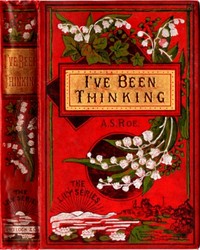
Those old hands at the X-bar camp knew fire, horses, and the sting of country that doesn't forgive. There’s a quiet ache in that, a knowledge that some lessons only come from years and scars, not books. That same ache flickers through I've Been Thinking; or, the Secret of Success — Themes and Context, where reflection feels less like advice and more like the ember of a campfire, still warm long after the story’s told.
Use these questions to collect your thoughts before moving on.