About 550 minutes
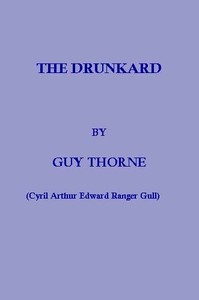
The Drunkard — Background and Themes
Fantasy Juvenile Worlds
126,345 recorded words. 17 minutes difference from this book's estimate.
View Gutenberg source #41139

Before opening The Hosts of the Lord — Reading Companion, the edition data offers a quick orientation: 122,400 words, 8 hr 53 min estimated reading time, and 14 detected text sections.
The text analysis averages about 18.2 words per sentence, while the detected sections provide another way to judge how the source is divided.
Project Gutenberg metadata also associates the work with “India -- Fiction,” connecting these edition facts with the source record’s subject description.
Explore this collection
These alternatives are selected using recorded categories and estimated reading time.
About 550 minutes
Fantasy Juvenile Worlds
126,345 recorded words. 17 minutes difference from this book's estimate.
View Gutenberg source #41139About 566 minutes
Fantasy Juvenile Worlds
130,049 recorded words. 33 minutes difference from this book's estimate.
View Gutenberg source #40480About 575 minutes
Fantasy Juvenile Worlds
132,044 recorded words. 42 minutes difference from this book's estimate.
View Gutenberg source #39461Search stored excerpts and compare books → Choose by your preferences →
Choices use stored catalog measurements. Estimates vary with reading speed. A shared category is a catalog label, not a claim that two books have the same argument or literary quality.
Search reads excerpt text stored with this catalog and links to its associated Gutenberg record. The connection is stored in the site database; this tool does not recheck that every excerpt is word-for-word identical to that external record. Excerpt search does not cover every chapter and does not verify historical publication dates.
Catalog snapshot checked: 2026-09-26. Coverage: 93 public books, 93 available source excerpts.
Calculated from edition completeness, EPUB availability, text structure and catalogue metadata. Not a user rating.
Total of 100 points, scaled to a 2.5-5.0 range. Editions with an empty description or a missing EPUB file are not scored.
Public-domain source text
The source text is kept in the dedicated reader, separate from this catalogue record and its commentary.
The novel begins with a British officer, Lance, arguing that mutual incomprehension between English and Indians keeps the peace; understanding, he claims, is what causes trouble. His companion, a younger man, listens as Lance measures the distance between a mud enclosure and a troop of soldiers—a landscape of sand, tiger-grass, and telegraph poles that underscores the colonial setting. The dialogue is sharp, skeptical, and laced with a nursery rhyme about a cat, suggesting that the English in India are willfully naive about those they govern.
Later excerpts introduce a love triangle: Erda, a woman with red-gold hair, is courted by both Lance and a man named Vincent Dering. She rejects Lance, declaring herself 'sworn to another work—the noblest work of all—to bring light to those that sit in darkness.' The phrase echoes missionary rhetoric, but the novel undercuts it when a searchlight—a new invention—suddenly illuminates the verandah, prompting a tart lady to say the natives should recognize English superiority. The light becomes a literal and ironic symbol of 'enlightenment.'
The first chapter, titled 'A Shadow,' introduces Lance as a sun-browned, monkey-faced Englishman who distrusts understanding between races. His speech is colloquial and cynical: 'So long as we don't understand them, and they don't understand us, we jog along the same path amicably.' The shadow of the title may refer to the moral darkness of colonialism, or to the literal shadows cast by the pith hat he wears. The searchlight that appears later—invented by a character named Eugene—turns dusk to day and exposes the group on the verandah. Mrs. Campbell calls it 'too much like the last day, comin' unawares,' while Vincent Dering wonders what the natives will think. The light is a technological marvel, but its use is trivial: to show off to guests. Steel uses it to question who really has the light, and what they do with it.
Erda, called 'The World's Desire' by Lance, is described with 'red-gold hair, the red-gold hem to her garment, the red-gold apple in her hand.' This mythological imagery—reminiscent of the goddess Idun or the golden apple of discord—sets her apart as an object of desire. Yet she is also a woman with a mission: she wants to 'bring light to those that sit in darkness.' Lance offers her love and a return to being 'Lady Carlyon as she was,' but she refuses, choosing self-sacrifice. The dialogue is tense and passionate; Lance calls her refusal 'bunkum' and accuses her of leaving him 'out in the black night.' The searchlight that follows seems to answer his complaint, but it also exposes the group's hypocrisy: they claim to have the light, but they are using it for a party trick.
Steel's setting is carefully drawn: the 'molten gold of sunlight,' the 'yellow sand,' the 'corn-coloured tussocks of tiger-grass.' The landscape is both beautiful and oppressive, and the English characters move through it as if it were a stage. Lance compares the English and Indians to 'pilgrims to the Cradle of the Gods' and 'telegraph-posts to the Adjutant General's office'—two poles that never meet. The image is striking: the telegraph pole represents British communication and control, while the pilgrim represents indigenous faith. The novel's structure, with chapter titles like 'Driftwood,' 'Under-currents,' and 'Wheels within Wheels,' suggests a world of hidden forces and misaligned intentions. The searchlight, which 'shot waveringly, as if uncertain,' before focusing on the verandah, may be the novel's central metaphor: a beam of knowledge that reveals only what it chooses, and leaves the rest in shadow.
The excerpts contain a range of voices: Lance's cynical drawl, Erda's earnest declarations, Mrs. Smith's gushing praise, Mrs. Campbell's dour suspicion, and Laila Bonaventura's 'full-throated tones.' Each character speaks in a distinct register, and their conversations often overlap or are interrupted by events—like the searchlight—that change the subject. Steel uses these interruptions to show how the English in India avoid confronting their own contradictions. When Vincent Dering asks Lance what the natives will say about the searchlight, Lance's reply is cut off. The novel seems to suggest that the English are more interested in their own dramas than in the people they rule. The final excerpt, from the Project Gutenberg boilerplate, is a jarring shift to legal and financial language, but it reminds us that the novel itself is a product of a system—of publishing, copyright, and digital reproduction—that has its own shadows.
Steel's novel rewards attention to its imagery of light and shadow, its layered dialogue, and its skeptical view of colonial 'progress.' The searchlight scene is a key moment: it literalizes the metaphor of enlightenment while exposing the characters' self-absorption. Readers may find it useful to track how each character uses the language of light and darkness, and to notice when the narrative withholds information—as it does with the natives' reactions. The novel is not a simple romance or adventure; it is a study of people who believe they are bringing light, but who remain in the dark about themselves.
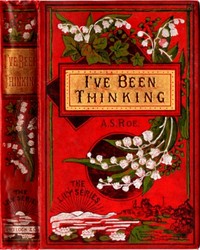
Reading about that searchlight cutting through the darkness, I remembered evenings in my grandfather’s study, his lamp pooling light on maps of places he’d never see. That old certainty in bringing “light” felt so fragile. I've Been Thinking; or, the Secret of Success — Themes and Context stirred the same quiet ache, questioning what we think we know about helping others.
Create a short personal record of your experience with this book.