About 566 minutes
The Quest of the Four: A Story of the Comanches and Buena Vista — Key Ideas to Explore
Fantasy Juvenile Worlds
130,049 recorded words. 9 minutes difference from this book's estimate.
View Gutenberg source #40480
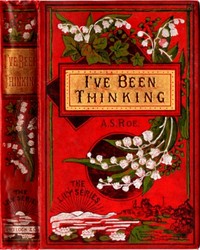
I've Been Thinking; or, the Secret of Success — Themes and Context can be approached with a clearer sense of reading commitment from its source measurements: 132,044 words, 9 hr 35 min estimated reading time, and 11 detected text sections.
The text analysis averages about 23.5 words per sentence, while the detected sections provide another way to judge how the source is divided.
Project Gutenberg metadata also associates the work with “Conduct of life -- Fiction,” connecting these edition facts with the source record’s subject description.
Explore this collection
These alternatives are selected using recorded categories and estimated reading time.
About 566 minutes
Fantasy Juvenile Worlds
130,049 recorded words. 9 minutes difference from this book's estimate.
View Gutenberg source #40480About 550 minutes
Fantasy Juvenile Worlds
126,345 recorded words. 25 minutes difference from this book's estimate.
View Gutenberg source #41139About 533 minutes
Fantasy Juvenile Worlds
122,400 recorded words. 42 minutes difference from this book's estimate.
View Gutenberg source #39991Search stored excerpts and compare books → Choose by your preferences →
Choices use stored catalog measurements. Estimates vary with reading speed. A shared category is a catalog label, not a claim that two books have the same argument or literary quality.
Search reads excerpt text stored with this catalog and links to its associated Gutenberg record. The connection is stored in the site database; this tool does not recheck that every excerpt is word-for-word identical to that external record. Excerpt search does not cover every chapter and does not verify historical publication dates.
Catalog snapshot checked: 2026-09-26. Coverage: 93 public books, 93 available source excerpts.
Calculated from edition completeness, EPUB availability, text structure and catalogue metadata. Not a user rating.
Total of 100 points, scaled to a 2.5-5.0 range. Editions with an empty description or a missing EPUB file are not scored.
Public-domain source text
The source text is kept in the dedicated reader, separate from this catalogue record and its commentary.
The novel opens with a pointed exchange between two brothers in a potato patch. Ned, prone to laziness, questions the point of raising more vegetables than they can eat. Jim, the industrious one, counters with a plan to sell the surplus. This initial dialogue establishes a central tension between idle complaint and purposeful action, a dynamic that recurs throughout the excerpts. The setting—a riverfront with a common, fishermen's huts, and a rocky oak-shaded seat—is drawn with specific, unhurried detail, grounding the moral lessons in a tangible place.
The early chapters trace the brothers' modest beginnings. Jim's resolve to sell their produce, met with Ned's laughter, quickly yields results. The narrative jumps ahead six years, and the transformation is stark: a new store, better goods, and a bustling trade have replaced the old barter economy. The text notes that “the opportunity they afforded the inhabitants to dispose of their productions advantageously, soon stimulated to increased cultivation.” This cause-and-effect logic—hard work leading to communal improvement—is the book's structural backbone. The arrival of Major Morris and Commodore Trysail, wealthy newcomers drawn by the location, further accelerates change. Their presence introduces a social layer: the old storekeeper Mr. Grizzle, clinging to his toddy-stick, represents a fading order unable to compete with “goods new and cheap” and “perfect fairness in dealing.”
Amid the economic progress, a small-town puzzle emerges: a newly built cottage, tastefully finished, whose owner remains unknown. The narrator notes that “mysteries in small towns are always troublesome things,” and the question “could not be solved all the while it was building.” This subplot adds a layer of curiosity and social texture, hinting at personal stories behind the material improvements. The cottage's location—on a rise overlooking Sam Oakum's humble hut—suggests a contrast between old and new, poverty and comfort. The reader is left to wonder who will inhabit it and how this mystery will intersect with the brothers' rise. The excerpts do not reveal the answer, but the careful placement of this detail indicates it will become significant.
The narrator's voice is direct and morally instructive, often summarizing a character's lesson. Jim's father's maxim—“it was better to be at work, even if we got no pay for it”—is offered without irony. The prose favors plain dialogue and descriptive passages that reinforce the value of diligence. When Ned laughs at Jim's sales plan, Jim simply resumes working, and Ned, ashamed, joins him. This pattern of temptation, correction, and return to labor is repeated. The book's title, I've Been Thinking, reflects Jim's reflective yet practical nature; he thinks before acting, and his plans bear fruit. The moral is not abstract but embedded in concrete outcomes: increased cultivation, better dress, neater dwellings.
The landscape is rendered with care: the “gentle slope of short greensward,” the river “whose waters had not far to go before they mingled with the ocean,” and the “barrens” that become valuable timberland. These details do more than decorate; they anchor the story in a specific coastal environment and show how the characters' efforts reshape it. The Commodore, who “could no more be easy without the sight and smell of salt-water,” and the fishermen's nets on stakes, reinforce the maritime setting. The transformation from “comparatively valueless wilds” to a source of revenue mirrors the brothers' own growth. The setting is not static but evolves with the community, making the physical world a measure of moral and economic progress.
Readers should pay attention to how the narrator balances individual effort with communal change. The brothers' story is intertwined with that of the town, and minor characters like Mr. Grizzle and the mysterious cottage owner add depth. The excerpts suggest a novel that rewards patience: the moral lessons are earned through detailed scenes of work and consequence, not preached in the abstract. Approach the book as a gradual unfolding of cause and effect, where every hoed row and every sold vegetable contributes to a larger picture of success.
I've known I've Been Thinking since my early shelving days, that quiet faith in steady hands. When I came across Ann Arbor Tales — Reading Notes, it felt like overhearing a familiar conversation—same patient attention to small lives, same unhurried warmth. They sit well together on my memory's shelf, two old friends sharing one lamplit room.
Save your reaction, strongest insight, and memorable passage.