About 176 minutes
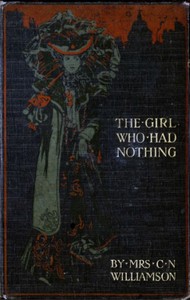
The Girl Who Had Nothing — Reading Notes
Historical Social Novels
40,251 recorded words. 10 minutes difference from this book's estimate.
View Gutenberg source #39730
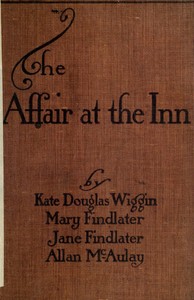
The catalog record for The Affair at the Inn — Inside the Classic provides practical reading context through 37,973 words, 2 hr 46 min estimated reading time, and 4 detected text sections.
The text analysis averages about 19.1 words per sentence, while the detected sections provide another way to judge how the source is divided.
Project Gutenberg metadata also associates the work with “Americans -- England -- Fiction,” connecting these edition facts with the source record’s subject description.
Explore this collection
These alternatives are selected using recorded categories and estimated reading time.
About 176 minutes
Historical Social Novels
40,251 recorded words. 10 minutes difference from this book's estimate.
View Gutenberg source #39730About 127 minutes
Historical Social Novels
29,065 recorded words. 39 minutes difference from this book's estimate.
View Gutenberg source #39543About 127 minutes
Historical Social Novels
29,021 recorded words. 39 minutes difference from this book's estimate.
View Gutenberg source #39847Search stored excerpts and compare books → Choose by your preferences →
Choices use stored catalog measurements. Estimates vary with reading speed. A shared category is a catalog label, not a claim that two books have the same argument or literary quality.
Search reads excerpt text stored with this catalog and links to its associated Gutenberg record. The connection is stored in the site database; this tool does not recheck that every excerpt is word-for-word identical to that external record. Excerpt search does not cover every chapter and does not verify historical publication dates.
Catalog snapshot checked: 2026-09-26. Coverage: 93 public books, 93 available source excerpts.
Calculated from edition completeness, EPUB availability, text structure and catalogue metadata. Not a user rating.
Total of 100 points, scaled to a 2.5-5.0 range. Editions with an empty description or a missing EPUB file are not scored.
Public-domain source text
The source text is kept in the dedicated reader, separate from this catalogue record and its commentary.
The Affair at the Inn is narrated by four distinct characters, each written by a different author, a structure that immediately foregrounds voice and perspective. The opening section, by Kate Douglas Wiggin, introduces Virginia Pomeroy, an American traveling with her mother through the British Isles. Her diary entry is marked by a self-aware, ironic tone: she describes her mother's interpretation of a doctor's advice as 'eternal change,' and compares their constant movement to 'What's-his-name in Bleak House.' This literary allusion and the playful jab at British insularity—'cabined, cribbed, confined'—establish a voice that is both observant and gently mocking.
The narrative then shifts to Mrs. MacGill, written by Mary Findlater, whose voice is more irritable and focused on domestic grievances. The contrast in tone is immediate: where Virginia is expansive and witty, Mrs. MacGill is clipped and complaining. This change in pace and perspective sets up a novel that is as much about the act of telling as about the events themselves.
The novel's structure—four authors, four characters—creates a deliberate polyphony. Virginia Pomeroy's narrative is characterized by a breezy, self-deprecating humor. She admits to being silenced by a 'frumpy Englishwoman' whose retort she acknowledges as 'a good one.' This willingness to undercut her own position gives her voice a lightness that contrasts sharply with Mrs. MacGill's. Mrs. MacGill, in her section, focuses on discomforts: the picnic eaten 'in a sort of grassy gutter,' the 'American tongue' she declines with suspicion. Her language is less figurative, more concrete, and her complaints are directed at the immediate physical world rather than at abstract national differences.
These contrasting voices do not simply alternate; they interact. Virginia reports Mrs. MacGill's behavior, but Mrs. MacGill's own account, when it comes, offers a different emphasis. The reader must weigh the two perspectives, noting how the same event—the picnic—is described with different emotional weights. This technique makes the narrative itself a subject of the novel, as the reader becomes aware of how character shapes storytelling.
The pace of the narrative varies significantly between sections, reflecting the temperament of each narrator. Virginia's diary entries move quickly, with short paragraphs and a conversational flow. She jumps from anecdote to anecdote, from the railway carriage to the picnic to the inn, creating a sense of restless energy. In contrast, Mrs. MacGill's section is more deliberate, dwelling on irritations and repeating grievances. The effect is a slowing of tempo, as if the reader is stuck in her fretful mindset.
This change in pace is not arbitrary; it mirrors the social dynamics of the group. When Virginia is in control, the narrative feels light and forward-moving. When Mrs. MacGill takes over, the story bogs down in petty disputes. The novel thus uses pacing as a tool for characterization, making the reader feel the weight of each narrator's personality. The 'dreadful interval of planning' that Virginia describes becomes, in Mrs. MacGill's hands, a prolonged ordeal.
The setting—the Grey Tor Inn on Dartmoor—is rendered through small, recurring details that accumulate across the narratives. Virginia notes the 'tiny Broadwood of a bygone century, fashioned like a writing-desk with a sort of bookcase top.' This specific object appears only in her section, but it anchors the inn in a particular material reality. Similarly, the weather is a constant presence: Virginia mentions rain that forces her to take shelter, and later describes herself 'soaked as to outer garments.' Mrs. MacGill, too, refers to the rain, but as a personal inconvenience rather than a atmospheric detail.
These recurring elements—the inn's low-ceiled rooms, the motor-shed, the 'quaint instrument'—create a shared world that each narrator experiences differently. The novel does not describe the inn comprehensively; instead, it lets the reader piece together the setting from these fragmentary, character-specific observations. This technique reinforces the theme of subjective perception, as the same physical space is filtered through different sensibilities.
Because the novel is divided among four authors and four viewpoints, readers may find it useful to attend to the shifts in voice and pace as signals of character. The narrative does not offer a single authoritative account; instead, it presents competing versions of the same events. Paying attention to what each narrator chooses to emphasize—and what they omit—reveals the novel's quiet comedy of manners. The 'affair' itself is less important than the way it is told.
That four-voice chorus at the inn stayed with me, how each retelling shifted the weather of the same evening. It reminded me of wandering through Upsidonia — Inside the Classic afterwards, where the world tilts so gently you almost don’t notice the ground changing beneath you. Both left a quiet hum, like a room after guests have gone home.
Build a private reading journal entry for this title.