About 277 minutes
Clara Vaughan, Volume 1 (of 3) — Themes and Context
Historical Social Novels
63,481 recorded words. 1 minutes difference from this book's estimate.
View Gutenberg source #41020
The source record for Upsidonia — Inside the Classic measures this digital text at 63,330 words, 4 hr 36 min estimated reading time, and 7 detected text sections.
The text analysis averages about 17.6 words per sentence, while the detected sections provide another way to judge how the source is divided.
Project Gutenberg metadata also associates the work with “Fiction,” connecting these edition facts with the source record’s subject description.
Explore this collection
These alternatives are selected using recorded categories and estimated reading time.
About 277 minutes
Historical Social Novels
63,481 recorded words. 1 minutes difference from this book's estimate.
View Gutenberg source #41020About 281 minutes
Historical Social Novels
64,515 recorded words. 5 minutes difference from this book's estimate.
View Gutenberg source #40939About 287 minutes
Historical Social Novels
65,994 recorded words. 11 minutes difference from this book's estimate.
View Gutenberg source #40539Search stored excerpts and compare books → Choose by your preferences →
Choices use stored catalog measurements. Estimates vary with reading speed. A shared category is a catalog label, not a claim that two books have the same argument or literary quality.
Search reads excerpt text stored with this catalog and links to its associated Gutenberg record. The connection is stored in the site database; this tool does not recheck that every excerpt is word-for-word identical to that external record. Excerpt search does not cover every chapter and does not verify historical publication dates.
Catalog snapshot checked: 2026-09-26. Coverage: 93 public books, 93 available source excerpts.
Calculated from edition completeness, EPUB availability, text structure and catalogue metadata. Not a user rating.
Total of 100 points, scaled to a 2.5-5.0 range. Editions with an empty description or a missing EPUB file are not scored.
Public-domain source text
The source text is kept in the dedicated reader, separate from this catalogue record and its commentary.
From its opening pages, Upsidonia announces itself as a satire through a narrator who stumbles into a cave and emerges in a world where every social rule is inverted. The prose is deliberately measured, even as the premise grows absurd: the narrator describes his guide's 'obliging manners but somewhat unkempt appearance' with a straight face, and the cave itself is 'a trifle disappointing' before it becomes a portal. Marshall's diction here is key—words like 'romance,' 'mystery,' and 'delightful visions' set up the fantastic, but the narrator's matter-of-fact tone keeps the reader grounded, making the inversion feel almost plausible.
Marshall's satirical method relies on a precise reversal of expected terms. In the excerpts, the narrator's guide speaks of the cave's 'ending' with a straight face, and later, the female character Miriam worries that spending money might be 'wicked' and that being well-dressed could cause others to 'look down' on her. These are not mere jokes; they are systematic inversions of Edwardian social values. The narrator, accustomed to a world where wealth is desirable, must constantly recalibrate. When he suggests a country house with 'a few thousand acres,' Miriam responds with genuine alarm: 'Isn't it rather dangerous? Mightn't you make a lot of money over it?' The humor emerges from the clash between the narrator's normalcy and the inverted logic of Upsidonia, rendered through dialogue that sounds earnest but is fundamentally absurd.
The extended conversation between the narrator and Miriam in the excerpts is the novel's satirical engine. Their exchange about housing, money, and social status reads like a parody of a Victorian marriage negotiation, but with the values flipped. Miriam's lines—'I suppose I shall get to enjoy possessions,' she says dubiously—reveal a character who has internalized Upsidonia's norms so thoroughly that she finds the narrator's plans 'rather nice' but also 'so funny.' Marshall uses her hesitations and the narrator's patient explanations to expose the arbitrariness of any society's rules. The dialogue is naturalistic in rhythm, with interruptions and affectionate asides ('Dear old boy!'), which makes the satire more pointed: these are recognizable people, not caricatures, which makes their upside-down logic all the more unsettling.
The first-person narrator serves as the reader's proxy, but his 'normal' perspective is itself a target of satire. He describes his own world with casual assumptions—that a country house with shooting and a home farm is a natural aspiration, that labourers' wives would not call on the gentry—that Upsidonia's inhabitants find baffling. Miriam's question, 'Would the labourers' wives—would they call?' exposes the class assumptions the narrator takes for granted. His response, 'Probably not. No, I don't think the labourers' wives would call,' is delivered without irony, but the context makes it ironic. Marshall thus uses the narrator's unselfconsciousness to critique the very world the narrator represents, making the reader complicit in recognizing the absurdity of both societies.
The physical settings in the excerpts—the cave, the moor-side hamlet, the imagined country house—are not mere backdrops but active elements of the satire. The cave, described with 'shale' and 'dripping' ferns, is a liminal space between worlds, and its 'disappointing' first appearance undercuts the romance the narrator projects onto it. Later, the narrator's vision of an 'old red-brick house, with a moat' is contrasted with Miriam's preference for a 'dear little house with a pretty garden, and no labour-saving appliances.' The inversion extends to architecture: the grand house is a source of anxiety, the modest cottage a comfort. Marshall uses these concrete details—the moat, the garden, the labour-saving appliances—to ground the satire in tangible choices, making the social commentary feel immediate rather than abstract.
Readers approaching Upsidonia should attend to the gap between what the narrator says and what the inverted world reveals. Marshall's satire works not through broad caricature but through the accumulation of small, precise reversals in dialogue and description. The novel rewards attention to word choice—especially the way characters use terms like 'dangerous' and 'wicked' in contexts that invert their usual meanings. The excerpts suggest a work that is both a period piece and a sharp critique of Edwardian social assumptions, delivered with a dry, understated humor that lets the absurdity speak for itself.
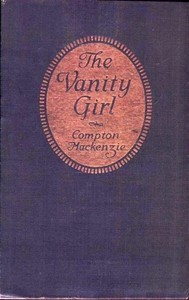
I often think of Upsidonia alongside another curious find, The Vanity Girl — Inside the Classic. Both share that quiet ache of watching someone tilt at their own reflection, never quite catching it. Marshall’s world inverts money and shame, while the other traces a girl’s climb. Different mirrors, same startled gaze. They sit well together on my shelf, whispering about the cost of wanting.
Create a short personal record of your experience with this book.