About 127 minutes
A Holiday in Bed, and Other Sketches — Edition Insights
Historical Social Novels
29,065 recorded words. 28 minutes difference from this book's estimate.
View Gutenberg source #39543
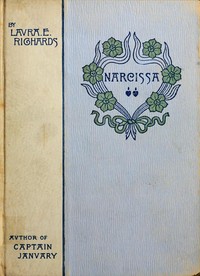
Narcissa, or the Road to Rome; In Verona — Inside the Classic can be approached with a clearer sense of reading commitment from its source measurements: 22,546 words, 1 hr 39 min estimated reading time, and 2 detected text sections.
The text analysis averages about 16.9 words per sentence, while the detected sections provide another way to judge how the source is divided.
Project Gutenberg metadata also associates the work with “Love stories,” connecting these edition facts with the source record’s subject description.
Explore this collection
These alternatives are selected using recorded categories and estimated reading time.
About 127 minutes
Historical Social Novels
29,065 recorded words. 28 minutes difference from this book's estimate.
View Gutenberg source #39543About 127 minutes
Historical Social Novels
29,021 recorded words. 28 minutes difference from this book's estimate.
View Gutenberg source #39847About 69 minutes
Historical Social Novels
15,651 recorded words. 30 minutes difference from this book's estimate.
View Gutenberg source #40016Search stored excerpts and compare books → Choose by your preferences →
Choices use stored catalog measurements. Estimates vary with reading speed. A shared category is a catalog label, not a claim that two books have the same argument or literary quality.
Search reads excerpt text stored with this catalog and links to its associated Gutenberg record. The connection is stored in the site database; this tool does not recheck that every excerpt is word-for-word identical to that external record. Excerpt search does not cover every chapter and does not verify historical publication dates.
Catalog snapshot checked: 2026-09-26. Coverage: 93 public books, 93 available source excerpts.
Calculated from edition completeness, EPUB availability, text structure and catalogue metadata. Not a user rating.
Total of 100 points, scaled to a 2.5-5.0 range. Editions with an empty description or a missing EPUB file are not scored.
Public-domain source text
The source text is kept in the dedicated reader, separate from this catalogue record and its commentary.
The novel opens with Narcissa sitting in a back doorway, feeding young turkeys and crushing a tansy leaf for its 'keen, wholesome smell.' Her mind drifts to a dress of 'green velvet, tansy-color, with gold buttons,' a fantasy sparked by the minister's wife's bonnet bow. This moment establishes a central tension: Narcissa's hunger for color and beauty against the gray, practical setting of a Maine farmhouse, where flagstones are cracked and grass grows in the seams.
Richards's prose lingers on sensory details—the tansy's scent, the 'soft, dusky cloudiness' of Narcissa's hair—while undercutting romanticism with dry humor. When Narcissa imagines a yellow satin gown from a crazy-quilt scrap, the narrative notes she 'had never seen anything finer than the black silk of the minister's wife.' The story's voice shifts between lyrical interiority and blunt rural dialogue, as when Miss Duty dismisses Bije's dazed talk of 'milk-pails' and 'pink calico' with a sharp 'if you are goin' loony, I'll thank you to take yourself off home.'
The book's first part is titled 'Dreaming,' and Narcissa's consciousness is saturated with imagined fabrics, colors, and stories. She 'had made a romance about every scrap of silk or satin' in a crazy-quilt, inventing a 'long, trailing robe, trimmed with filmy lace' from a pink scrap. Yet the narrator undercuts these fantasies: 'It never occurred to Narcissa that she needed no fine clothes to set off her beauty; in truth, she never dreamed that she had any beauty.' Her self-image is shaped by the community's verdict that she is 'pindlin'-lookin'.'
In contrast, the second excerpt introduces Bije Green, a boy 'used to cheerful conversation' who finds Miss Duty's monosyllabic 'H'm!' stifling. His perception is concrete: he sees Betsy Garlick's 'red-and-white' cheeks and thinks of a 'snow-apple,' and her pink calico gown seems 'all of a flutter.' Where Narcissa abstracts, Bije fixates on physical details—milk-pails that 'twinkle' like silver, a girl who 'toss[es] her curls.' The narrative shifts between these two modes, suggesting that dreaming and waking are not opposites but complementary ways of engaging with a world that offers both tansy bushes and witch-grass.
Richards uses everyday objects to crystallize her characters' longings. For Narcissa, the tansy bush is a touchstone: she 'liked to pluck a leaf and crush it in her hands, to bring out the keen, wholesome smell.' The minister's wife's black straw bonnet with a green velvet bow becomes a symbol of inaccessible elegance. Even the crazy-quilt, a patchwork of donated scraps, serves as a canvas for her imagination—each piece 'a romance.'
For Bije, the milk-pail transforms under Betsy's hands into 'pure silver,' and the witch-grass he hoes becomes an emblem of pointless labor. His sister Delilah 'was always saying that there was use for everything; Bije wished she were here, to tell him the use of witch-grass.' The objects are never merely functional; they carry emotional weight. Miss Duty's 'frosty glance' and the 'gormin' round' dismissal further show how domestic tools and routines can become instruments of social control, shaping what characters can dream or say.
Dialogue in these excerpts is sparse but loaded. Miss Duty's 'H'm!' is a recurring refrain, a verbal gate that shuts down Bije's attempts at 'cheerful conversation.' When he ventures 'Nice day!' the response is a 'H'm!' that 'did not encourage further remarks.' The narrator notes that 'jawing never did no good that he could make out, though he didn't know but he'd ruther be jawed than hear nothing at all from get up to go to bed.' This economy of speech contrasts sharply with Narcissa's internal monologue, which is rich with imagined dialogues and stories.
Silence also governs the encounter between Bije and Betsy. He stares 'with no knowledge that his mouth was open'; she returns 'a calm survey which took him all in' before disappearing. No words are exchanged. The narrative voice itself oscillates between lyrical description and dry, ironic commentary—as when it notes that Bije 'had never heard of such a thing' as witch-grass after seeing Betsy. This interplay of voiced and unvoiced, said and implied, creates a texture where much of the emotional life happens below the surface of conversation.
Readers will find that Richards's novel rewards attention to its small, precise details: the 'crooked flagstones,' the 'gold buttons' of an imaginary dress, the 'twinkle' of a milk-pail. The story moves between Narcissa's interior world and Bije's more earthbound perspective, but both characters are shaped by the same rural landscape and its taciturn inhabitants. Rather than a straightforward romance, the book offers a study in how people use imagination, objects, and silence to navigate lives of limited means and even more limited expression.
Sometimes I wonder if Narcissa’s yearning for Rome is really about the road at all, but about the wanting. There’s a quiet echo of that in John Burnet of Barns: A Romance — Text and Context, where the Borders hills hold their own version of longing. Both feel less like escapes and more like a pause, waiting for the self to catch up with the dream.
Capture what you thought, learned, and would like to remember.