About 44 minutes
The Snowball — Background and Themes
Historical Social Novels
9,915 recorded words. 25 minutes difference from this book's estimate.
View Gutenberg source #39216
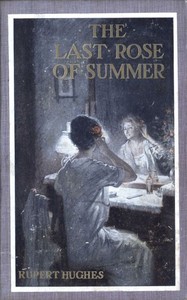
Before opening The Last Rose of Summer — Reading Notes, the edition data offers a quick orientation: 15,651 words, 1 hr 9 min estimated reading time, and 3 detected text sections.
The text analysis averages about 15.8 words per sentence, while the detected sections provide another way to judge how the source is divided.
Project Gutenberg metadata also associates the work with “Love stories,” connecting these edition facts with the source record’s subject description.
Explore this collection
These alternatives are selected using recorded categories and estimated reading time.
About 44 minutes
Historical Social Novels
9,915 recorded words. 25 minutes difference from this book's estimate.
View Gutenberg source #39216About 99 minutes
Historical Social Novels
22,546 recorded words. 30 minutes difference from this book's estimate.
View Gutenberg source #41188About 127 minutes
Historical Social Novels
29,065 recorded words. 58 minutes difference from this book's estimate.
View Gutenberg source #39543Search stored excerpts and compare books → Choose by your preferences →
Choices use stored catalog measurements. Estimates vary with reading speed. A shared category is a catalog label, not a claim that two books have the same argument or literary quality.
Search reads excerpt text stored with this catalog and links to its associated Gutenberg record. The connection is stored in the site database; this tool does not recheck that every excerpt is word-for-word identical to that external record. Excerpt search does not cover every chapter and does not verify historical publication dates.
Catalog snapshot checked: 2026-09-26. Coverage: 93 public books, 93 available source excerpts.
Calculated from edition completeness, EPUB availability, text structure and catalogue metadata. Not a user rating.
Total of 100 points, scaled to a 2.5-5.0 range. Editions with an empty description or a missing EPUB file are not scored.
Public-domain source text
The source text is kept in the dedicated reader, separate from this catalogue record and its commentary.
The novel opens not with a solitary heroine but with a community event: Mrs. Shillaber throws a party where the borrowed camp-stools from the undertaker collapse with comic regularity. This blend of social comedy and mortality sets the tone for a story that treats aging with both humor and pathos. The catalog subjects list "Love stories" and "Single women -- Fiction" as primary, but the excerpts focus less on romantic pursuit than on the physical and social decay of former beauties. Deborah, the single woman working in a department store, observes these changes with a mixture of pity and self-awareness.
The opening chapter establishes a distinctive voice through its focus on material objects. The camp-stools from Mr. Crankshaw, the undertaker, are described as "perilous old man-traps" that add "a dash of excitement to the dullest evening." This recurring detail—the stools that collapse or refuse to open—serves as a running joke that also hints at the fragility of social pretensions. The narrator notes that the obstinacy of some stools "almost implied a perverse intelligence," and the one that cannot be solved "generally fell to the solemnest man in the company." This attention to physical comedy is paired with a sharp eye for social dynamics: the party is held to honor Birdaline Nickerson, who had been a rival for Asaph Shillaber's love. The humor undercuts the potential melodrama of the love triangle, suggesting that the novel will treat romantic rivalry with a wry, unsentimental gaze.
The second excerpt shifts to Deborah's workplace, where she sells dry goods. Here, the narrative voice becomes more explicitly elegiac. Women come to her counter "with a new meekness" as age makes it harder to keep pace. The prose employs a sustained floral metaphor: "Their petals were falling from them, the velvet was turning to plush, and the plush losing its nap, rusting, sagging, wearing through. The years, like moths, were gnawing, gnawing." Deborah feels sorry for women who had been beautiful, imagining "how the decay of rosehood must hurt." This interior perspective is crucial: the catalog subject "Single women -- Fiction" might imply a focus on marital status, but Deborah's empathy for aging women—including her former rival Josie—suggests the novel's deeper interest in the universal experience of physical decline. The department store becomes a theater where the passage of time is measured in fabric and fading beauty.
A striking passage reveals that Deborah herself is undergoing a physical transformation: "she was only now filling out, taking flesh upon her bones and rhythm into her members. And that scrawny chicken-chest of hers was becoming worthy of that so beautiful name for so dear a place; she was gaining a bosom." The narrator notes that "the whimsical sultan Time had shifted his favor to her from his other slaves," yet Deborah remains unaware of this change. She sees only Josie's decline and feels "wet-eyed pity." This asymmetry—the reader sees Deborah's late blooming while she herself does not—creates a complex emotional effect. The catalog subject "Older women -- Fiction" is accurate, but the novel's treatment is more nuanced than a simple story of aging. Deborah's position as an observer rather than a participant in her own transformation suggests a narrative strategy that withholds self-knowledge from its protagonist, inviting the reader to see what she cannot.
Readers should attend to the novel's use of physical objects—camp-stools, fabric, a dressing table—as carriers of meaning. The excerpts suggest a work more interested in the social performance of age and beauty than in conventional romantic plot. The catalog subjects may lead one to expect a love story, but the evidence points toward a meditation on time's effects, told through a protagonist who is both inside and outside the drama of decline.
Deborah’s quiet watch at that party reminded me of my aunt’s last summer, when she stopped pretending the mirror mattered. We sat on the porch, and she spoke of being invisible—not sadly, but with relief. I found the same honesty in The Yellow House; Master of Men — Inside the Classic, which hushed the room around me like dusk, letting age rest without apology.
Capture what you thought, learned, and would like to remember.