About 302 minutes
The House 'Round the Corner — Themes and Context
Historical Social Novels
69,403 recorded words. 2 minutes difference from this book's estimate.
View Gutenberg source #39432
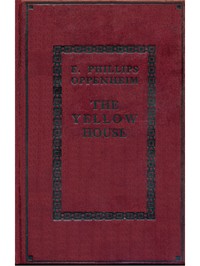
The catalog record for The Yellow House; Master of Men — Inside the Classic provides practical reading context through 68,947 words, 5 hr estimated reading time, and 33 detected text sections.
The text analysis averages about 11.6 words per sentence, while the detected sections provide another way to judge how the source is divided.
Project Gutenberg metadata also associates the work with “Detective and mystery stories,” connecting these edition facts with the source record’s subject description.
Explore this collection
These alternatives are selected using recorded categories and estimated reading time.
About 302 minutes
Historical Social Novels
69,403 recorded words. 2 minutes difference from this book's estimate.
View Gutenberg source #39432About 294 minutes
Historical Social Novels
67,425 recorded words. 6 minutes difference from this book's estimate.
View Gutenberg source #39776About 310 minutes
Historical Social Novels
71,259 recorded words. 10 minutes difference from this book's estimate.
View Gutenberg source #41021Search stored excerpts and compare books → Choose by your preferences →
Choices use stored catalog measurements. Estimates vary with reading speed. A shared category is a catalog label, not a claim that two books have the same argument or literary quality.
Search reads excerpt text stored with this catalog and links to its associated Gutenberg record. The connection is stored in the site database; this tool does not recheck that every excerpt is word-for-word identical to that external record. Excerpt search does not cover every chapter and does not verify historical publication dates.
Catalog snapshot checked: 2026-09-26. Coverage: 93 public books, 93 available source excerpts.
Calculated from edition completeness, EPUB availability, text structure and catalogue metadata. Not a user rating.
Total of 100 points, scaled to a 2.5-5.0 range. Editions with an empty description or a missing EPUB file are not scored.
Public-domain source text
The source text is kept in the dedicated reader, separate from this catalogue record and its commentary.
The opening chapter of The Yellow House establishes a narrator who is acutely aware of social hierarchies. The first paragraph details the careful scrutiny of the Ffolliot family by the local gentry, with the narrator noting the "little veiled anxiety" over the spelling of their name and the relief when the Warwickshire connection is confirmed. This voice is measured, almost gossipy, yet precise in its social observations. The pace is leisurely, matching the rhythm of country calls and tea visits.
The narrator, one of the vicar's daughters, speaks in the first person but reveals little of her own emotions. Instead, she records the reactions of others: the Countess's daughters who "gushed over our late roses," the careful questions about the family name. This observational stance creates a sense of detachment, as if the narrator is a camera recording the scene. The language is formal and slightly archaic—"positively every one," "elaborately careless questions"—which suits the period setting but also distances the reader from the narrator's inner life. The effect is a slow, deliberate buildup of atmosphere, where social niceties mask underlying tensions.
As the narrative progresses, the pace quickens when the mysterious Miss Berdenstein enters. Her dialogue is direct and charged with emotion: "I think that if I could meet the man who did it face to face, I would stab him to the heart myself." This outburst contrasts sharply with the narrator's measured prose. The other characters' reactions—Bruce Deville's hand shaking, the exchange of swift glances—are noted but not explained, leaving the reader to infer hidden connections. The dialogue becomes the primary vehicle for advancing the plot, while the narrator's voice recedes into the background, observing but not interpreting.
Oppenheim uses repetition of key phrases to build tension. Miss Berdenstein repeatedly asks about the name "Maltabar," and each time the response is a denial or evasion. The narrator notes that Bruce Deville "showed no surprise" at her revelation, suggesting he knows more than he admits. Yet the narrator does not speculate; she simply records. This restraint keeps the reader in a state of uncertainty, mirroring the narrator's own limited knowledge. The pacing is uneven—long, descriptive passages of social ritual are punctuated by short, tense exchanges. This rhythm creates a sense of unease, as if the calm surface of country life could crack at any moment.
The Yellow House itself is introduced as a place of social performance—the lawn, the cedar trees, the late roses. But as the mystery deepens, the setting becomes more ominous. The moor is mentioned in chapter titles, and the house's isolation is implied. The narrator's descriptions remain factual, but the accumulation of details—the weather, the tea table, the ringing of bells—creates a claustrophobic atmosphere. The pace slows when the narrator dwells on domestic routines, then accelerates when characters confront each other. This alternation keeps the reader engaged, but the narrator's flat tone prevents full immersion, maintaining a critical distance.
Readers should attend to the narrator's selective attention: what she chooses to describe and what she omits. The gaps in her observations—her own feelings, the motives of others—are as telling as her words. The novel's mystery may lie less in the plot than in the narrator's controlled, withholding voice. Pay attention to the moments when the pace shifts abruptly; these are likely clues to the story's hidden tensions.
The rain drummed a steady counterpoint to Oppenheim’s measured suspense, each social observation a delayed breath before the next revelation. Afterwards, I lingered on the narrator’s discomfort with his own class, a feeling that somehow nudged me toward a stranger, sunnier satire of inverted hierarchies—Upsidonia — Inside the Classic—where even the weather seemed to argue with his certainties.
Create a short personal record of your experience with this book.