About 68 minutes
Shadows in the Moonlight — Text and Context
Fantasy Juvenile Worlds
15,569 recorded words. 3 minutes difference from this book's estimate.
View Gutenberg source #42188
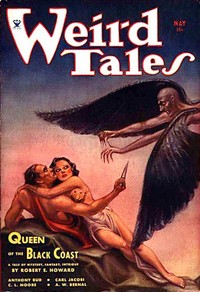
Queen of the Black Coast — Key Ideas to Explore can be approached with a clearer sense of reading commitment from its source measurements: 14,728 words, 1 hr 5 min estimated reading time, and 2 detected text sections.
The text analysis averages about 19.3 words per sentence, while the detected sections provide another way to judge how the source is divided.
Project Gutenberg metadata also associates the work with “Fantasy fiction, American,” connecting these edition facts with the source record’s subject description.
Explore this collection
These alternatives are selected using recorded categories and estimated reading time.
About 68 minutes
Fantasy Juvenile Worlds
15,569 recorded words. 3 minutes difference from this book's estimate.
View Gutenberg source #42188About 68 minutes
Fantasy Juvenile Worlds
15,583 recorded words. 3 minutes difference from this book's estimate.
View Gutenberg source #42196About 68 minutes
Fantasy Juvenile Worlds
15,599 recorded words. 3 minutes difference from this book's estimate.
View Gutenberg source #42209Search stored excerpts and compare books → Choose by your preferences →
Choices use stored catalog measurements. Estimates vary with reading speed. A shared category is a catalog label, not a claim that two books have the same argument or literary quality.
Search reads excerpt text stored with this catalog and links to its associated Gutenberg record. The connection is stored in the site database; this tool does not recheck that every excerpt is word-for-word identical to that external record. Excerpt search does not cover every chapter and does not verify historical publication dates.
Catalog snapshot checked: 2026-09-26. Coverage: 93 public books, 93 available source excerpts.
Calculated from edition completeness, EPUB availability, text structure and catalogue metadata. Not a user rating.
Total of 100 points, scaled to a 2.5-5.0 range. Editions with an empty description or a missing EPUB file are not scored.
Public-domain source text
The source text is kept in the dedicated reader, separate from this catalogue record and its commentary.
Robert E. Howard's 'Queen of the Black Coast' opens with a burst of physical action: hoofs drumming, a mailed figure leaping aboard a galley, and threats of bloodshed. The prose matches the urgency, with short, punchy sentences and vivid sensory details—'red drops from his broadsword,' 'glittered bluely in the sun.' Yet the story soon pivots to a very different register, introducing a poetic interlude titled 'The Song of Bêlit' before plunging into a hallucinatory jungle sequence. This editorial note examines how Howard alternates between headlong adventure and dreamlike horror, and how the narrative voice shifts to accommodate both modes.
The opening chase scene is a model of compressed momentum. Howard uses rapid-fire dialogue—'Get under way!' 'Then I'm for Kush!'—and physical cues like the stallion 'jerking back on its haunches' to create a sense of immediacy. The paragraph lengths are short, and the point of view stays tightly focused on Conan's actions. Contrast this with the later jungle passage, where the prose becomes languid and hypnotic: 'the jungle waved and dimmed out before his eyes.' The pace slows to match the protagonist's creeping lethargy, and the sentences grow longer, more atmospheric. This rhythmic alternation is a deliberate structural choice, not a lapse in energy.
Conan's speech is terse and confrontational: 'I pay my way with steel!' The shipmaster's voice is pragmatic, and the narrative itself favors blunt verbs—'roared,' 'yelled,' 'sprang.' But the story also includes a framed poem, 'The Song of Bêlit,' which introduces a lyrical, first-person feminine voice: 'Believe I held my heart inviolate / To lavish on one man my hot desire.' This shift in register is jarring but purposeful, hinting at a romantic or mythic dimension that the prose alone does not convey. The poem's archaic diction and regular meter stand apart from the colloquial violence of the main narrative, suggesting that Bêlit's perspective will operate on a different emotional plane.
The third excerpt describes a vision of an alien city and its degenerate inhabitants, rendered in a style that borders on cosmic horror. Howard abandons the concrete details of the wharf scene for abstract imagery: 'blackness of an utter void,' 'cold winds of cosmic space.' The syntax becomes more complex, with subordinate clauses piling up: 'as if the darkness were taking material form.' This passage is not merely a diversion; it introduces a theme of evolutionary decay and ancient evil that recontextualizes the jungle threat. The pacing here is glacial, a deliberate counterpoint to the earlier speed, and the narrative voice adopts an almost anthropological detachment, describing the winged beings as 'the ripe blossom on an alien tree.'
Readers attuned to shifts in tempo will find that Howard uses pace as a storytelling tool, not just a byproduct of action. The poem, the chase, and the vision each demand a different reading speed. Pay attention to how the prose contracts and expands, and how the voice modulates from hard-boiled to elegiac. These variations are the fingerprints of a writer working at the height of his pulp craft, balancing momentum with atmosphere.
There’s a moment in Queen of the Black Coast where the swords-and-sorcery rush slows, just long enough for Conan to feel the weight of mortality. It puts me in mind of another quiet study, The Crime and the Criminal — Reading Notes, which lingers on why we chase trouble at all. Both leave a curious ache, like remembering a storm that passed too quickly.
Capture what you thought, learned, and would like to remember.